
Introducing the concept
Ethics is a very important aspect of any philosophical system. What is morally right and what is morally wrong? What is the value system that we should have as a benchmark? What are the guidelines for us to make the morally correct choices at each point, both individually and as societies? These are questions that every complete philosophical system must provide answers to. In short, do the core philosophical tenets enable us to be good human beings - in thought and deed - and what indeed does ‘good’ constitute?
In Hinduism more broadly, and not just in Advaita Vedanta, ethics has two aspects - subjective and objective.
Objective ethics concerns our responsibilities and duties based on our place in society and our stage of life (varnashrama dharma) as well as some eternal moral principles that every individual in society must be guided by (sadharana dharma).
Subjective ethics, on the other hand, concerns how the individual can attain purity of mind (chitta shuddhi) so as to be able to make the final spiritual leap; subjective ethics is related to one’s personal journey to strengthen and purify their mind, with the goal being Self-realization.
In Hinduism, objective ethics, while being important, is not the final destination; objective ethics must facilitate the subjective quest. As Swami Nikhilananda writes, ‘Hindu ethics is primarily concerned with self discipline leading to the liberation of the individual.[1]’
You might wonder, then - Is that not self-centric? Also, if you have reached this page after reading and dwelling on the fundamentals of the philosophy, you will know that, per Advaita Vedanta, the world is ultimately unreal. How can this facilitate good ethical conduct? If the world is unreal, then can we not do whatever we want? Does Advaita lead to a worldview without ethics?
No, far from it. In fact, Advaita Vedanta is the only philosophical system that can provide a robust ground for ethics. Advaita Vedanta has a very clear definition of ethics and it requires the highest standard of ethical behavior from its practitioners. Let us see how.
Going a little deeper
Let us ask some more fundamental questions. Who or what determines Right from Wrong in the first place? What are the justifications for any moral guidelines? These are questions that have bothered thinkers since the dawn of civilization.
Different answers have been provided to these questions, resulting in different ethical models. There is a utilitarian idea of ethics, which says that what matters is the outcome of the actions you perform. You might have good intentions and might have performed what you consider to be the right actions based on these intentions. But if that resulted in harm being caused to people, then your actions were morally wrong. In general, utilitarianism says that one should do what leads to the best possible outcomes for the largest number of people.
Another school is deontological ethics, which says that your actions and the intentions behind them are what matter, regardless of the consequences. Actions are good and bad in themselves, and it is our duty to perform good actions and stay away from bad ones, regardless of outcomes. The sense of duty is an important aspect of deontological ethics.
You might find that there are strong justifications for both of these approaches. But these approaches still do not satisfactorily answer the fundamental questions we asked ourselves - Is there a rational reason why a certain action is good and bad? Who says that an action is good in itself; indeed, what is ‘good’? And a ‘good’ outcome for one person might be a ‘bad’ outcome for another. Who is the arbiter of good and bad? Who is the judge that is handing out my moral character certificates, and what yardsticks does he or she follow?
Vedanta says that there IS a rational ground for ethics. And that is because we are all, very literally, one. This has been called Ontological Ethics; in other words, ethics which rests on the very nature of our existence.
‘Love thy neighbor’ is a very good dictum, and fosters the right behavior in society. But when asked why one must not hurt one's neighbors, we might say either that it is something inherently wrong to do (deontological ethics) or that it will result in your neighbor retaliating, and hence poorer outcomes for everybody (utilitarian ethics). Vedanta's answer to the question of why one should not hurt our neighbors is that, in your real nature, you and your neighbors are one undivided Existence; hurting your neighbors would mean - in a real and not just in a poetic sense - that you are hurting yourself.
And how can one realize our true nature as Pure Existence? By melting down our Ahankaara (ego). Read our pages on Antahkarana (Inner Instrument) and Sadhana (Spiritual Practice). It is the ego that creates the illusory appearance of this limited self that we, in ignorance, take to be ‘me’; it is the ego that also creates the illusory separation between ‘me’ and ‘others’. Thus when I slowly shed my ego, I get closer to realizing my real nature, and simultaneously realize my oneness with everyone else.
Thus the spiritual journey in Advaita Vedanta requires selflessness - the more selfless you are, the purer your mind is to reflect the glory of the Atman. And the spiritual destination is one where you have shed your ego, which means you have gone beyond selfishness of any sort. Morality in Advaita Vedanta is both a necessary preparatory condition and a natural end state.
In other words, ethics flows very naturally from the metaphysics of Advaita Vedanta.
Tying the threads together
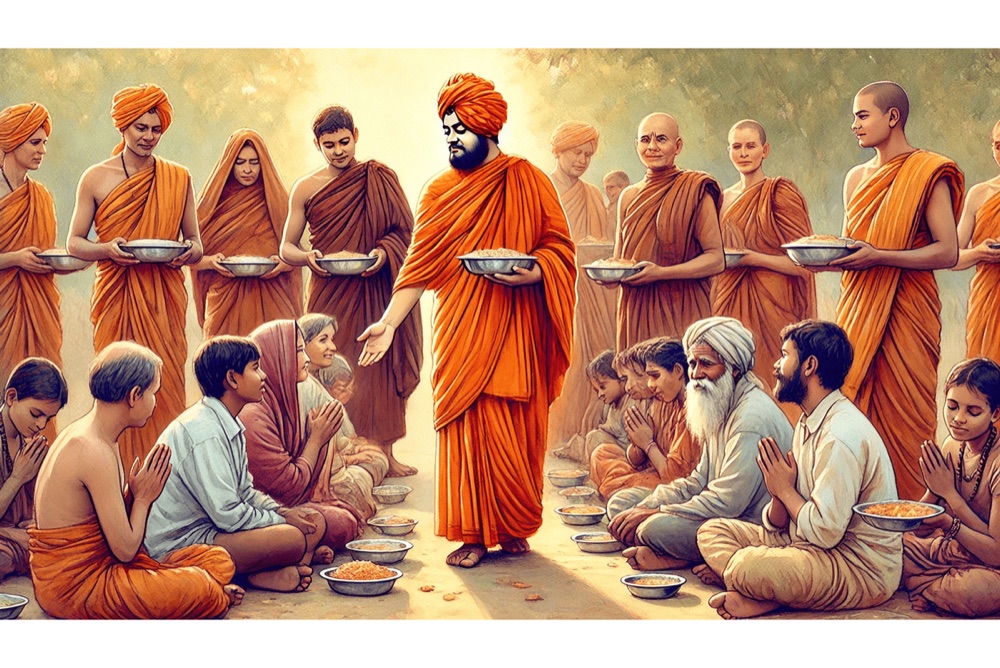
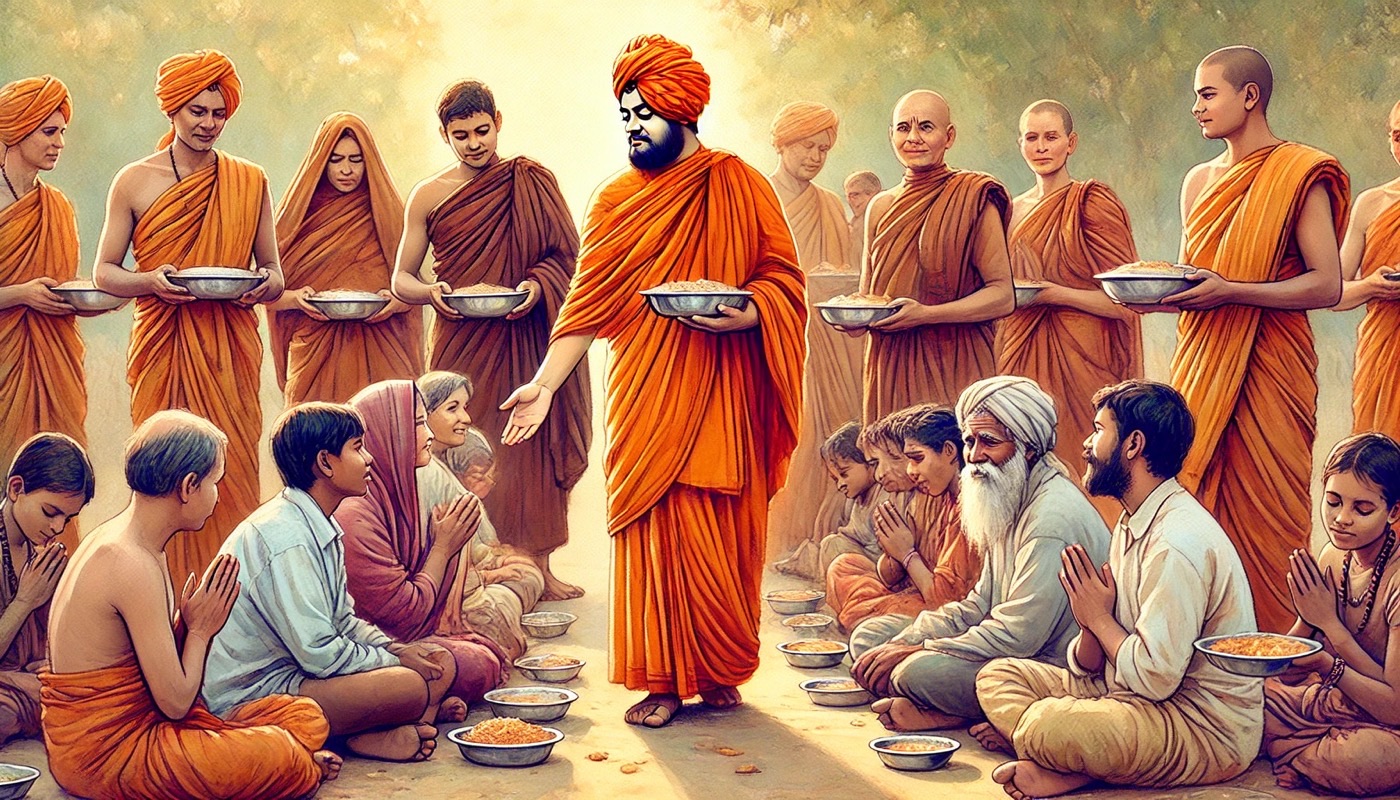
Very simply put, in Vedanta, to be good is to be selfless. To think about the welfare of others, to act in a way that is a blessing to others, to not be caught up in self-centered thoughts - these are some of the traits of a good person.
And the goal of spiritual practice in Vedanta is Self-realization, to understand that we are the light of Pure Consciousness. Any good thought or act - which by definition is any selfless thought or act - will chip away at the ego and take you closer to Realization.
The four Yogas - the four paradigms of spiritual practice - are all designed to shed our ego. Selflessness is at the center of each of the Yogas (see our page on the 4 Yogas). Progressing on any of these paths - or a combination of them - will necessarily make you a better person. And a society that facilitates more people to progress on the path of Self-realization will naturally tend toward goodness and superior morality. This is the fundamental premise of Hindu ethics.
Reflect on this
How is it that each of the Yogas takes us towards selflessness? What is common to Jnana, Bhakti, Karma, and Dhyana?
Let us go back to this line from our introductory segment - ‘In Hinduism, objective ethics, while being important, is not the final destination; objective ethics must facilitate the subjective quest.’ Can you see how, by prioritizing individual, subjective ethics, the society that is constructed will be one of the highest collective, objective ethics?