Introducing the concept
In the beginning of the Mundaka Upanishad, Saunaka, who was driven by the quest for knowledge, approaches the great rishi Angirasa and asks, ‘Revered sir, what is that by the knowing of which all this becomes known?’
Saunaka represents all of us seekers. We look at the world, we look at ourselves, and we ask - ‘What is all this? Where did it come from? What was there before the beginning? What will be there after the end?’ Our desire to understand has led to advancements in science - we now seem to know the world at the largest and smallest of scales. Sitting on Earth, we can now examine the most far flung galaxies in the Universe; in our labs and particle accelerators we can probe into the smallest confines of the atom. This is a remarkable achievement. But the more we learn about the world, the more questions are thrown up. We peel away layer after layer of the world, only to find an unending number of further layers underneath. Where does it all end?
In our scientific explorations we identify the patterns and interactions between things in the world, and we are doing this to a very high degree of sophistication. This has led to great advancements in technology. But we will keep explaining things in the world by using other things in the world. At some point in our investigations of the world we will realize that we will never answer the ultimate questions using our current methods. We will then step back and ask ourselves - Does this chain end anywhere? What is all this? What is the fundamental ground on which everything else rests? Is there an unshakeable, absolute Truth behind everything in the relative world? What is it by knowing which, everything else becomes known?
Saunaka indeed speaks for all of us.
In response to his question, the sage Angirasa proceeds to tell Saunaka about the Highest Truth, about that Highest Knowledge that is the foundation of all other knowledge, about that Imperishable Existence that stays constant as the Witness of all birth, growth, decay, and death. Rishi Angirasa told Saunaka about Brahman.
Brahman in Vedanta stands for Ultimate Reality, the unshakeable ground of all Existence. Brahman is the central subject matter of Vedanta and the final destination of the spiritual quest. The entirety of Vedanta is nothing but the attempt to understand, to experience, and finally to merge with Brahman. It is the highest knowledge and the pinnacle of spiritual experience. In It all questions dissolve, into It all existence merges. Brahman is the Unmanifest and Unchanging Reality that existed before the manifestation of the World, that watches on as the drama of the World proceeds, and remains untouched when the World dissolves back into its source. Only the Knowledge of Brahman can ‘break the fetters of the heart’ and solve all doubts.
Going a little deeper
The Brahma Sutra describes Brahman as that from which proceeds the origin, the sustenance, and dissolution of the universe.[1] It is Brahman alone that appears as the universe,[2]it is Brahman alone that is in the universe through and through, yet Brahman is completely untouched by the universe, like water off a duck’s back.
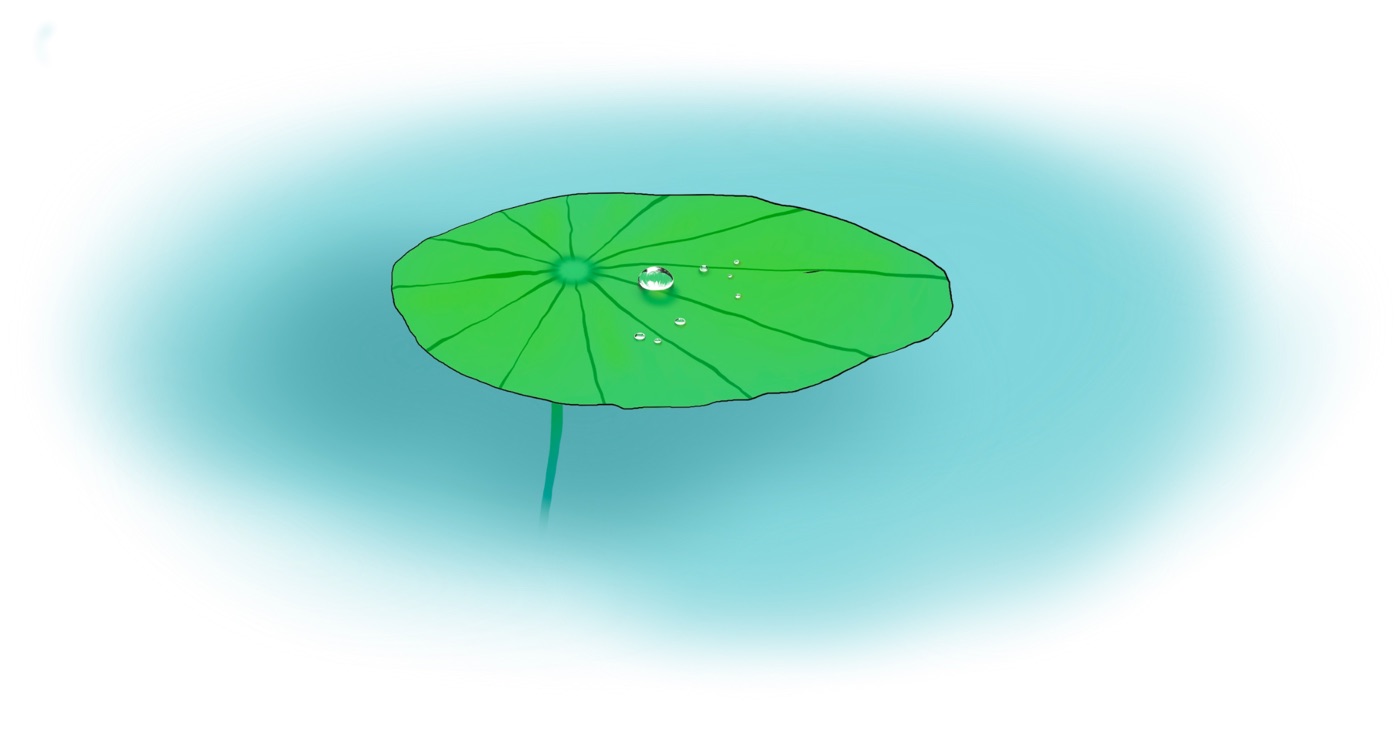
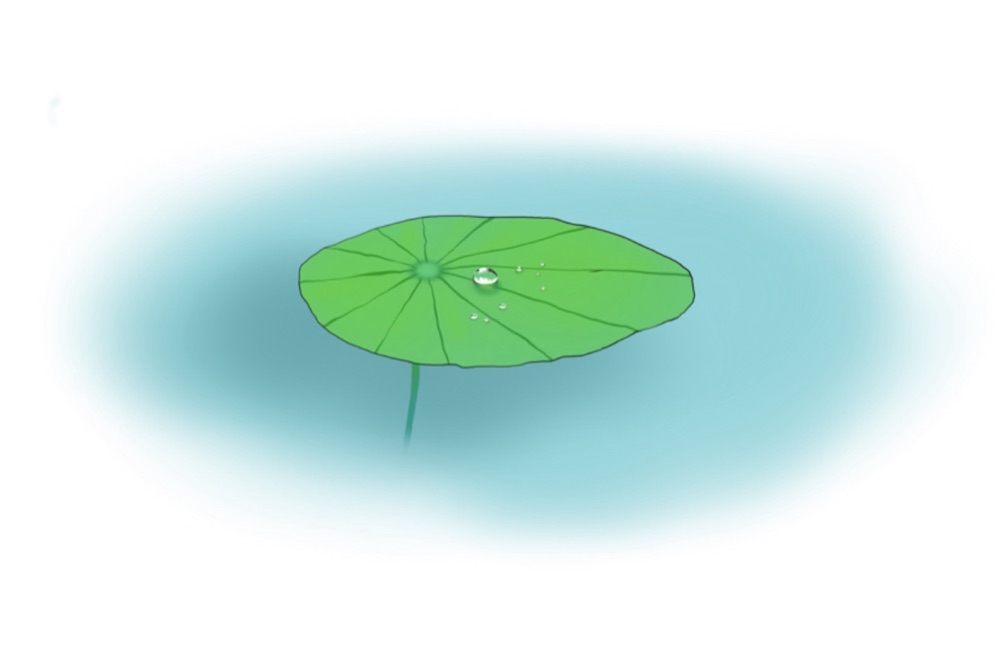
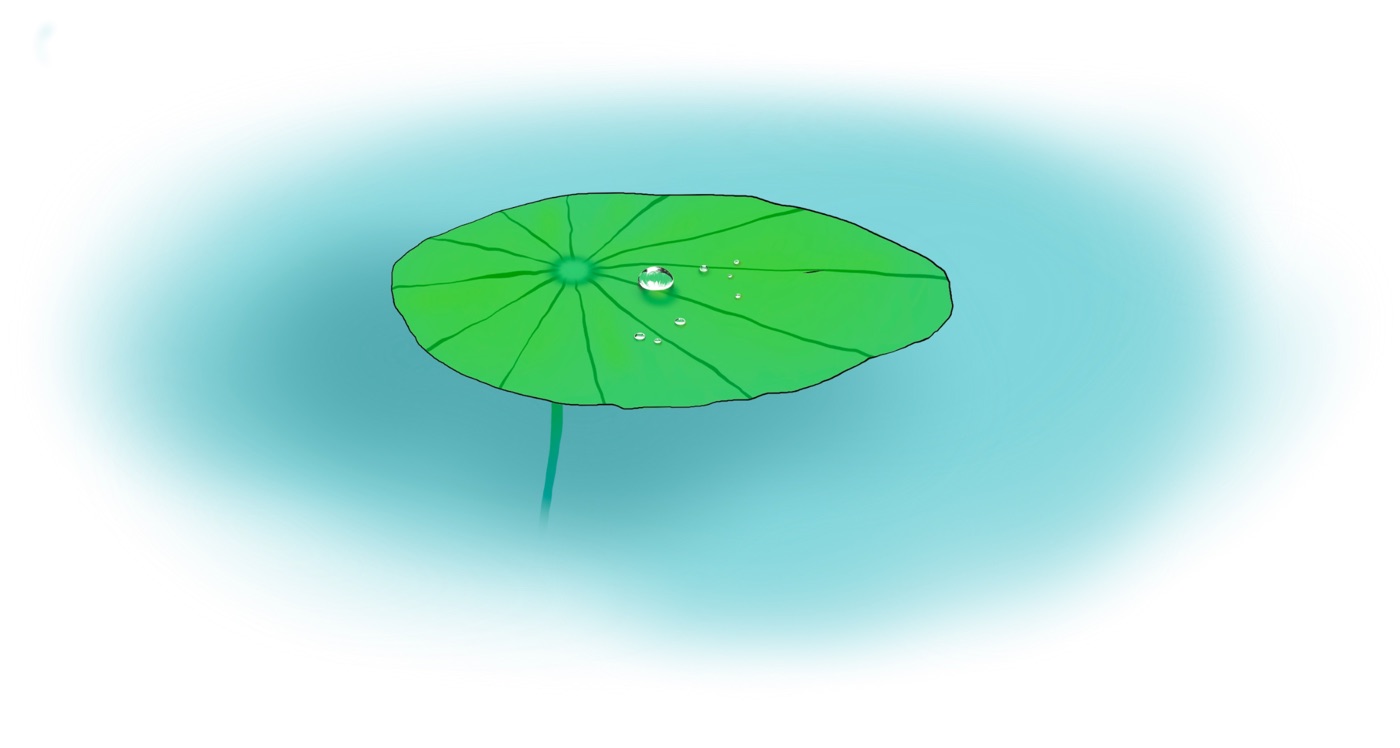
Just like water drops don’t stick to lotus leaves, though the world and its events are sustained by Brahman, it is not stained by them at all.
How can we know Brahman? How can we know the Ultimate Reality? Everything we can know will be relative or partial - in the process of knowing anything, we are slicing up the Absolute into pieces, into the knower and the known; by such a process how can we ever grasp the entirety of existence? If I know about an object ‘X’, I am separating out X from all the other objects in the world, and more crucially I am separating myself (the knower) from X (the known); how will I ever be able to see the unity and entirety of existence from the ‘outside in’?
Our minds are limited, they operate within the relative world; our minds are designed to slice the world into pieces that it can process. Our minds will never be able to grasp Brahman by the normal means of gathering knowledge. We will never be able to know Brahman like we know other objects in the world. Note the word ‘object’.
Brahman in the Upanishads is described as ‘A-vaak-manasa-gocharam’, as That which is forever ‘beyond the reach of words and thought’.
Does that make the entire philosophical and spiritual quest futile? If we will never be able to know Brahman, then why even start the journey?
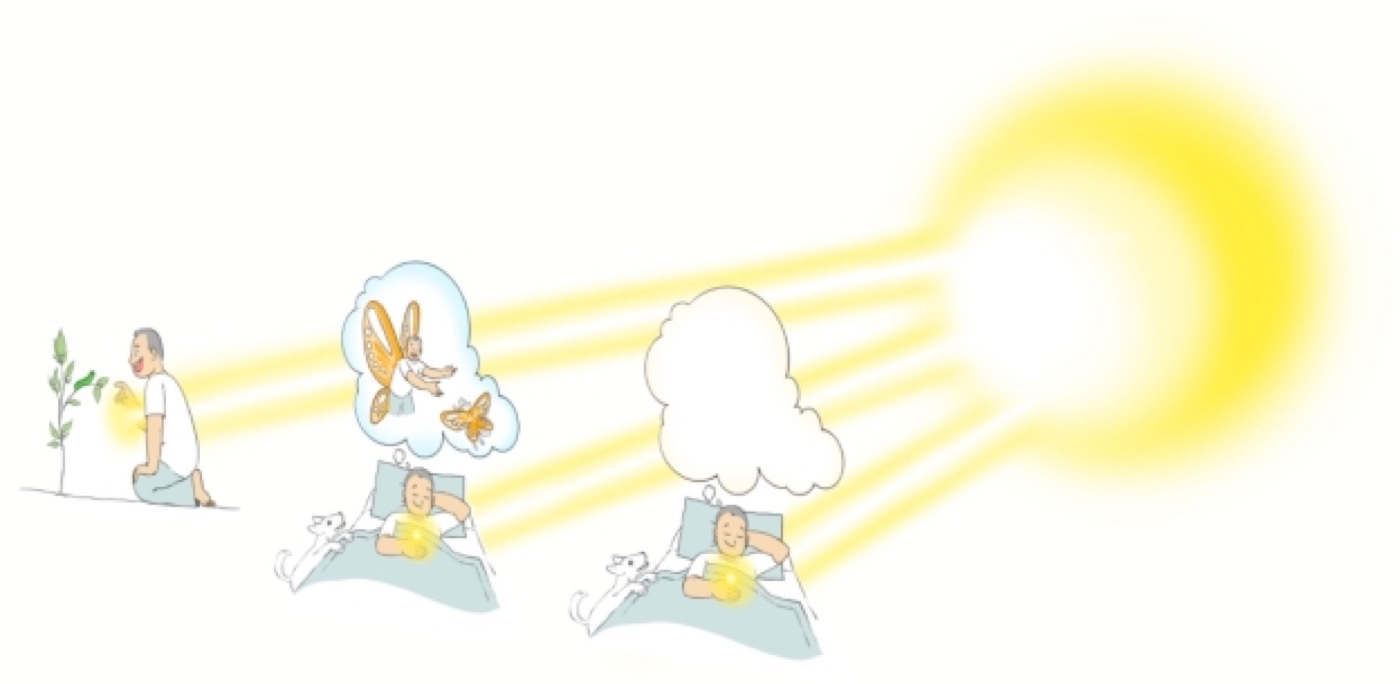
No, the quest is not at all futile. Far from it! This is where the glorious, stunning message of Advaita Vedanta comes in. While you might not be able to find Brahman however much you search in the world, you need not look for it outside; for Brahman is the very Self that is searching - You are Brahman! Brahman is Pure Consciousness. (<Hyperlink to page on ‘Prajyanam Brahma’). We mentioned earlier that we will never be able to know Brahman like we know other objects in the world - that is because Brahman is not an object; it is the Subject to which all objects appear. It is you the Pure Consciousness. It is you the Eternal Witness.
‘Aham Brahmasmi!’ - ‘I am Brahman!’ is the pinnacle of Advaita Vedantic realization (see Mahavakya). You are the Absolute.
But wait, you might say - I am this limited person, with this limited mind; how can I be this Infinite Existence? To which Vedanta says - You must understand what you really are, you must sharply investigate into the real nature of your existence. Are you really this limited body and mind? Vedanta provides systematic methods to conduct this inquiry. When you use these teachings to conduct the Self-investigation, you will set aside layer after layer of ‘not you’ until your real nature reveals itself in all Its glory. We consider ourselves to be limited because of ignorance; Knowledge of our real nature will wash this ignorance away.
So when we are seeking Brahman, we are seeking our own real Self; we must stop looking for Brahman elsewhere in the world and instead find out who we really are. When we know the nature of clay, it can be said that we know everything made of clay. Similarly, when we know the nature of our Self, we will know the nature of everything that exists.
You might have another question at this point - We just mentioned that Brahman is forever beyond words and concepts, that it can never be known in the way we know other things in the world; if I myself am Brahman, you might wonder, how is it possible that it is beyond knowledge - does that mean I can never know myself in my real nature?
In response to this, consider the following question. Can you ever see your own face? All your life, you have only seen reflections of your face - in mirrors, on shiny surfaces, on the still surface of a clear lake. All your life, you will never be able to see your own face directly. But does that mean you do not have a face? Of course not, every reflection is a clear pointer to the fact that you have a face. In fact, even if there were no mirrors anywhere, nothing to see your reflection on, you will still not be bothered, you will not go around wondering ‘Do I have a face?’, because you know with unshakeable certainty - with direct knowledge - that you have a face. You don’t require a mirror to tell you that.
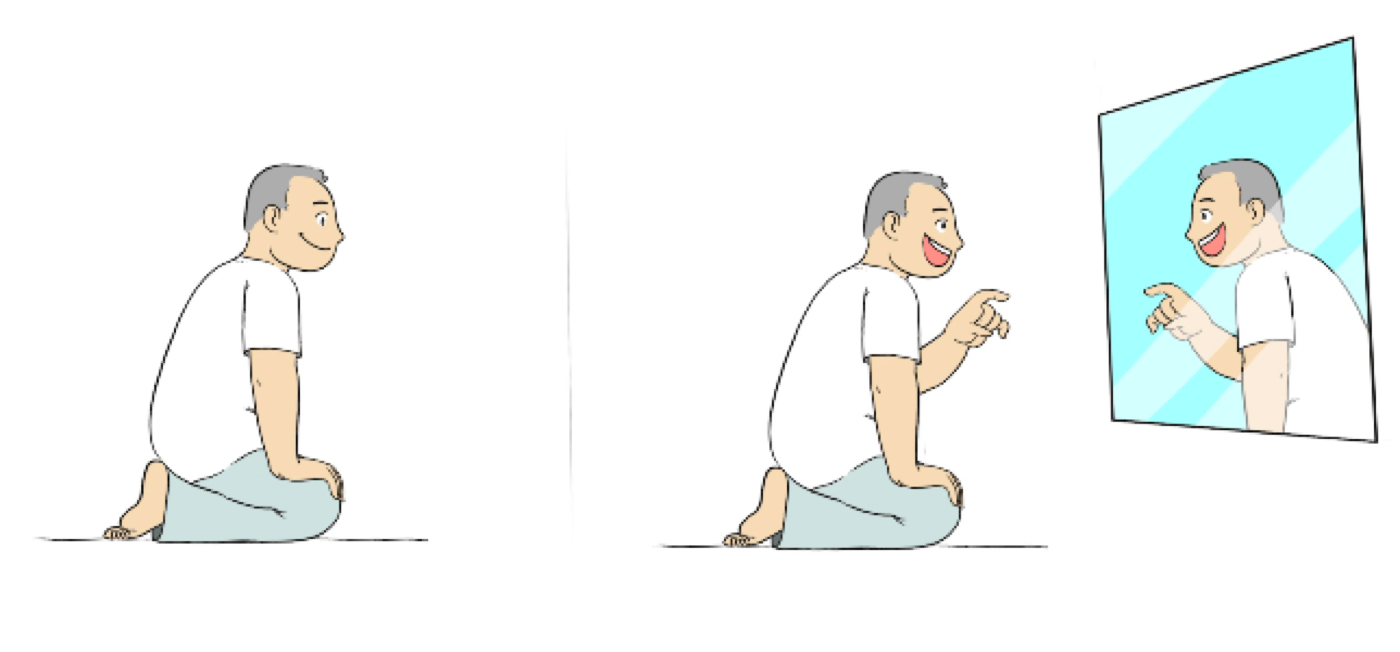
We see our face only when we have a mirror in front!
Similarly, when, by studying the teachings of the Acharyas and deeply examining ourselves, we begin to see who we are, we will realize that we will never be able to describe ourselves using words, we will never grasp ourselves using thoughts and concepts. So what? That is how it must be. For, like we explained earlier, knowledge by definition is a limitation, it implies a separation of the Absolute Existence into knower and known; knowledge by its very nature will never be able to capture the Absolute undivided Existence that is you.
You don’t need a mirror to know that you have a face, and you don’t need words and concepts to realize your essential nature. Words, ideas, concepts - all these are essential tools for us to utilize as we make our way around the world; in fact they are essential tools even in the spiritual quest. But a time must come in our spiritual journeys when we can let go of all of these tools and just be. A time must come when you can let go of the limitations of objective knowledge and stay firmly, peacefully, blissfully in your own Self.
Tying the threads together
Since Brahman is above anything in the objective world, the accurate way of describing Brahman, as it has been done in the Upanishads, is ‘Neti, neti’ - ‘Not this, not this’. You take any object, any ‘this’ - Brahman is not ‘this’. Brahman is that which remains after negating everything that can be pointed to as ‘this’. What remains if you do the ‘Neti, neti’ process, if you negate every single object in the world? Brahman remains, as the Consciousness to which all these objects appear.
While it is true that Brahman is beyond the reach of words or thought, our Upanishadic seers and Acharyas used words as powerful pointers to the Truth. When one begins to understand the teaching of Vedanta, we will see that everything in the world is in fact an undeniable pointer to Brahman, so why not use words and symbols? The negative definition of Brahman as ‘Neti, neti’ should not give the impression that Brahman is a void or an emptiness. To prevent this, the rishis also provided a positive definition - Brahman is Sat-chit-ananda. Brahman is Sat (Existence Itself), Brahman is Chit (Consciousness Itself), Brahman is Ananda (Bliss Itself). Explore the pages on Sat, Chit, and Ananda to understand Brahman in all its aspects.
If all this is hard to grasp right now, do not worry. The other pages in this lexicon will provide you steps to arrive at a fuller understanding. Explore them in any order, but pay attention as you read and reflect on the concepts introduced on each page. For now, just know that Brahman or Satchidananda stands for Ultimate Reality, and the crystal clear teaching of Advaita Vedanta is that you - in your real nature - are nothing but Brahman Itself.
We will leave you with the very first verse of the Srimad Bhagavatam, which is a stirring invocation to Brahman -
‘He from whom the creation, sustenance and dissolution of the universe take place; who is both the material and instrumental cause of it; who is omniscient; who is the only One having self-mastery, being the one independent entity; who illumined the mind of Brahma with the Vedic revelation whose wisdom is the wonder of even the greatest of sages; in whom the worlds, the manifestation of the three gunas, subsist in reality without in the least affecting Him, just as the combination of material elements like fire, water, and earth subsist in their causes without changing their elemental nature; in whose light of consciousness there is no place for anything false - on that Truth Supreme we meditate.[3]’
Reflect on this
An important concept introduced in this page is that Ultimate Reality is beyond knowledge, because knowledge by its very nature is limiting - one cannot grasp the Absolute with an instrument - i.e. our minds and our intellect - that is designed to see partial slivers of reality. But at the same time we also said that Brahman cannot be slotted under the category of ‘unknown’ or ‘unknowable’ either, since we can go to a level higher than knowledge, where we obtain the spiritual realization and experience of our absolute identity with Brahman.
How can we be something but not be able to know or see it? In the text above we provided the example of a mirror. We will leave you with another example for self-reflection (quite literally) -
Your eyes help you see things in the world. But can your eyes ever see themselves? Your eyes can see reflections of themselves in a mirror, but will they ever be able to directly see themselves? Do you need to directly see your eyes to know that you have eyes? Is everything else you see not a direct affirmation of the fact that you have eyes?