
Introducing the concept
The word ‘Yoga’ signifies union with the Absolute; any practice that takes one closer to the Absolute is Yoga. The four paths or paradigms of Yoga are Jnana Yoga, Bhakti Yoga, Karma Yoga, and Raja Yoga. In reality, spiritual practice will involve a combination of these paths; read our page on Sadhana (Spiritual Practice) to learn more about how we must strive to combine these paths. But the central emphasis for sadhakas of Advaita Vedanta is on Jnana Yoga, or the Path of Knowledge.
Why is Knowledge so important in Advaita Vedanta sadhana? It is because the fundamental problem we are solving, per Advaita Vedanta, is our ignorance of our Real Nature; we do not know what we really are. If ignorance is the problem, the solution can only be Knowledge. Not any knowledge - knowledge of the sciences or the arts does not qualify as Jnana Yoga - but the Highest Knowledge, the knowledge of the Atman.
‘The highest teachings of Vedanta embedded in the Upanishads teach us about our Real Nature. Who or What are we in reality? What is this unfathomable Universe all about? This once grasped, and not on faith but based on logic and rationality as well as our direct experience about our own Self, shows us not only our True Nature; not only resolves the mystery of this Universe but also clarifies with crystal clarity the meaning of God and proves beyond doubt that Truth is not separated from us in time and space, benevolent or malevolent but it is in us, in the depth of nature. And furthermore, by knowing our real nature, we realize that we are the Truth.’
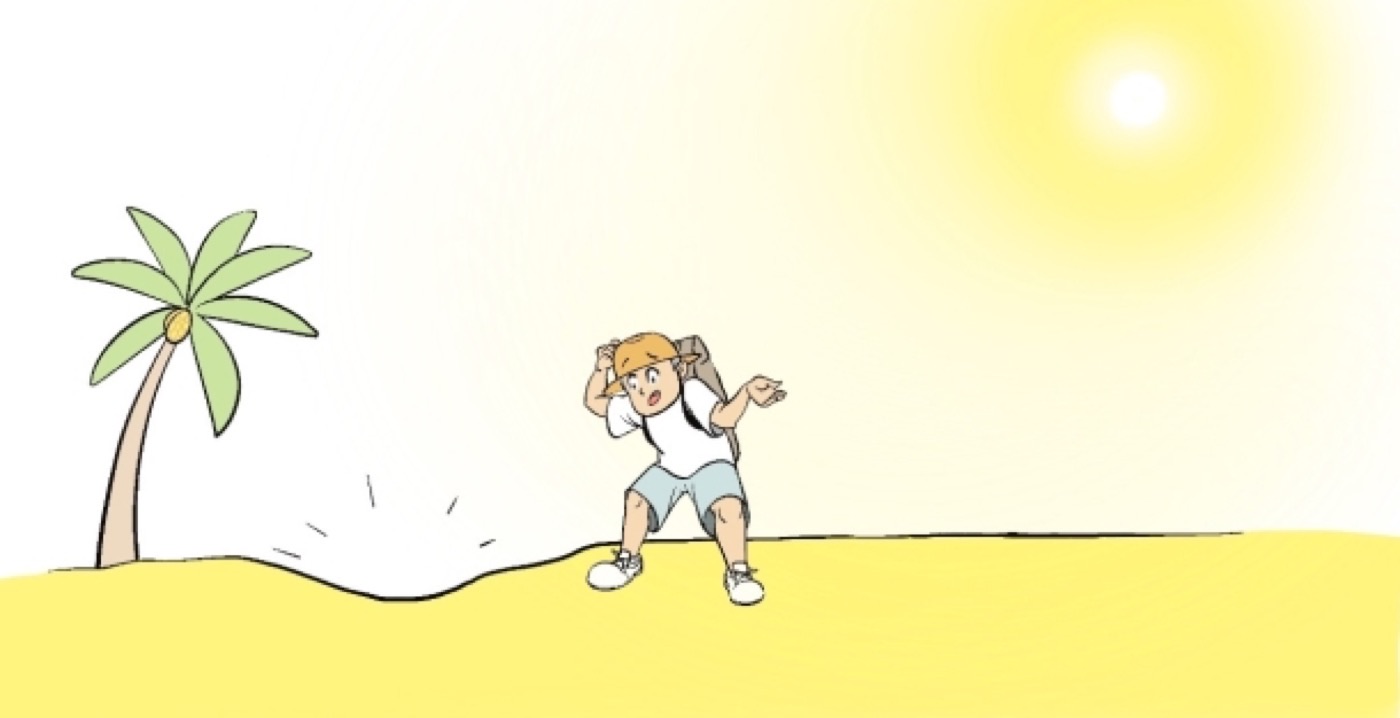
The Knowledge that one gains on the path of Jnana Yoga must be such that one sees through the superimposition (adhyasa) that this World is. When we look at a mirage in the desert, we initially might get deceived, thinking it to be water. Later, when we have knowledge of the mirage, we continue to see the illusory water but we know that it is the sand underneath that we are truly seeing; we realize that the mirage is an unreal superimposition (adhyasa or adhyaropa) on the real sand. Just as the knowledge of the mirage helps us de-superimpose (apavada) the mirage to see the sand underneath, the Knowledge of Brahman - gained on the path of Jnana Yoga - will de-superimpose the World to reveal Brahman everywhere, in everything.

Going a little deeper
More specifically, the path of Jnana Yoga consists of these three steps - Sravana (listening), Manana (reasoning and contemplation), Nididhyasana (intense meditation).
One begins by listening, with Shraddha (attention and reverence), to the source texts of Vedanta delivered by a qualified Guru. These source texts - the Prasthana Traya - are the Upanishads, the Brahma Sutra, and the Bhagavad Gita, all with Adi Shankaracharya's commentary. This listening and absorption of the teachings of Vedanta is called Sravana.
Once we have received the teachings, we then have to contemplate and reason out the teachings until we have no doubt about their truth. Think of every possible argument against the teachings of Advaita Vedanta and then see if you can respond to them in a water-tight manner. Don’t compromise, don’t settle for a vague or partial understanding. Push until you have full intellectual clarity. This process of contemplation, which typically starts during Sravana and continues after it till a solid understanding settles in, is called Manana.
With Manana, the core intellectual segment of Jnana Yoga is complete - you have a clear understanding of the Highest Truth, you can reason it out clearly with yourself and others. But you might find that the teachings, while clear to you intellectually, are not blossoming into an effortless, lived reality. You know Brahman but you are not able to experience It. The third - and the hardest and most important - part of Jnana Yoga is where we intensely stay with the Truth, moment to moment, however we can. We constantly remind ourselves of what we have learned, we find ways to take our mind away from the World and point it towards the Atman. This intense meditation on Reality is called Nididhyasana.
Nididhyasana can take multiple different forms, it varies from person to person. Some will contemplate on Brahman using a Mahavakya, some might focus on the idea of Pure Consciousness, some might try to see themselves as the Witness of everything that appears to them.
It is not necessary that we must find ways to constantly repeat the teachings to ourselves - we could choose to do so, but this is not the only way forward. After all, when true understanding dawns, ignorance is dispelled permanently, and it is dispelled instantly, the very moment understanding dawns. Thus there is no need to keep telling ourselves the truth. What this constant repetition does help with, though, is in focusing and purifying our mind, in taking it away from the million directions in which it is constantly pulled.

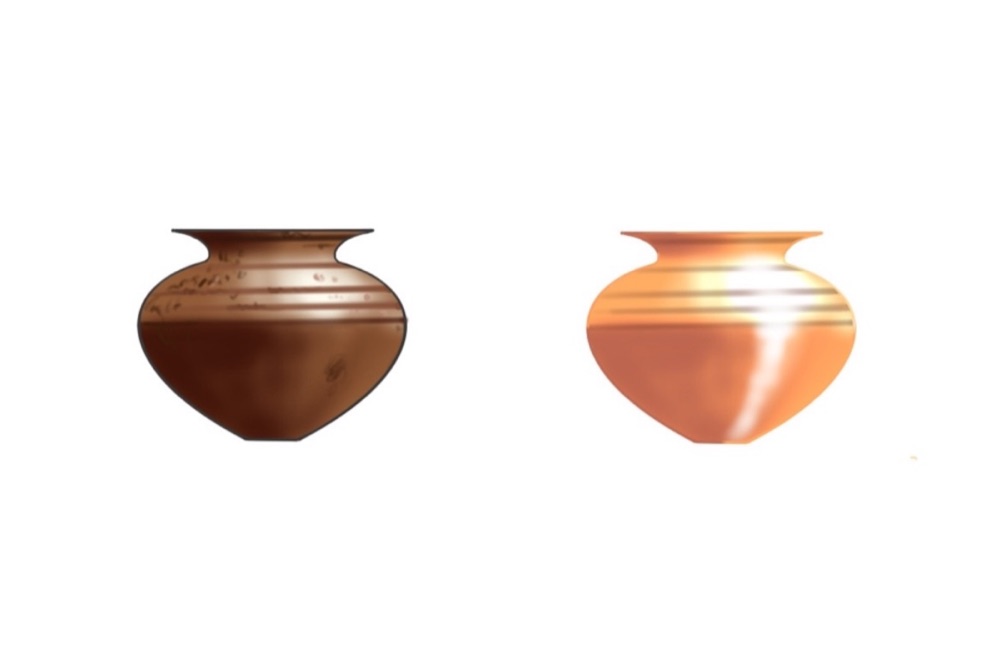
Old brass vessel Polished brass vessel
Sri Ramakrishna gives us a wonderful example. A brass vessel needs to be washed and polished to bring back its shine, else it loses its lustre with time. Similarly we need to polish our mind regularly by repeating to it that we are the Atman and our true nature is infinite, we are the atman, so that the mind is polished and reflects the pure atman!
This takes us back to the fundamental idea of spiritual practice in Advaita Vedanta, which is to scrub the mind until it is pure enough to reflect the blazing light of the Atman. Which is why Bhakti (devotion), Karma (selfless action) and Dhyana (meditation) can be seen as powerful ways to carry out Nididhyasana.
After all, once we have gained the Knowledge of the Absolute, the mind and particularly the ego - the limited sense of ‘I’ - need to step away so that our Real Nature as Consciousness can shine forth unobstructed. Surrendering oneself to the Lord, performing actions for the wellbeing of others, and shutting down the mind for periods of time are all ways of shedding the ego, and thus all these paths help us in our quest for Realization. The entire spectrum of spiritual practice can be placed under Nididhyasana.
Tying the threads together
Vidyaranya Swami, one of the foremost Gurus in the tradition of Advaita Vedanta, writes that if one gains a clear understanding of the teachings of Vedanta, their journey in Samsara has come to an end; such people will merge with Brahman when they come to the end of their current life.
But, Vidyaranya Swami says, the ultimate goal of human life is not to merge with the Absolute after one’s physical death; the ultimate purpose of our existence is to live with the constant, effortless realization that ‘I am That’, to see Consciousness everywhere. This state is called Jivanmukti - liberated while living.
The end-goal of Jnana Yoga is not to merely gain erudition, is not to become a scholar and collect degrees, is not to read libraries of texts. The end-goal of Jnana Yoga is Jivanmukti.
Reflect on this
Can the framework of Jnana Yoga broadly apply to any subject that you want to master?
Let us say you want to learn Mathematics. You begin by carefully listening to the instruction of the teacher (or the virtual teaching assistant, as the case might be); you then study what you have learnt, working on the problems listed out in your textbook (or on your online course) until the concepts are very clear to you; and then you apply the concepts you have gained into things in the world around you. You then begin to see the world in a new light, through the lens of the mathematical concept you have learnt.
Main references: - Brihadaranyaka Upanishad
- Jnana Yoga lectures of Swami Vivekananda
- Panchadasi by Vidyaranya Swami
- Multiple lectures by Swami Sarvrpriyananda