
Introducing the concept
You must have encountered this situation before - you are traveling in a bus or a car down a long highway on a very hot day; you see a glimmer on the road ahead of you, some distance away. Seems very much like water. How come there is so much water on the road, you wonder - that too on such a hot and dry day? As you get closer, you realize that your eyes were deceived - there is no water at all - it was a mirage!
Similarly, imagine if you were walking across a vast desert on a hot day, and you are very thirsty. In the distance you see a glimmer on the sand - looks like a small pond! Your heart surges, you can’t believe your good luck; you run toward it desperately, imagining how good the cool, clear water will taste. As you get closer, your heart sinks - there is no pond, it is merely a mirage, a deception, a magic trick. Where you thought you saw water, there is just sand.

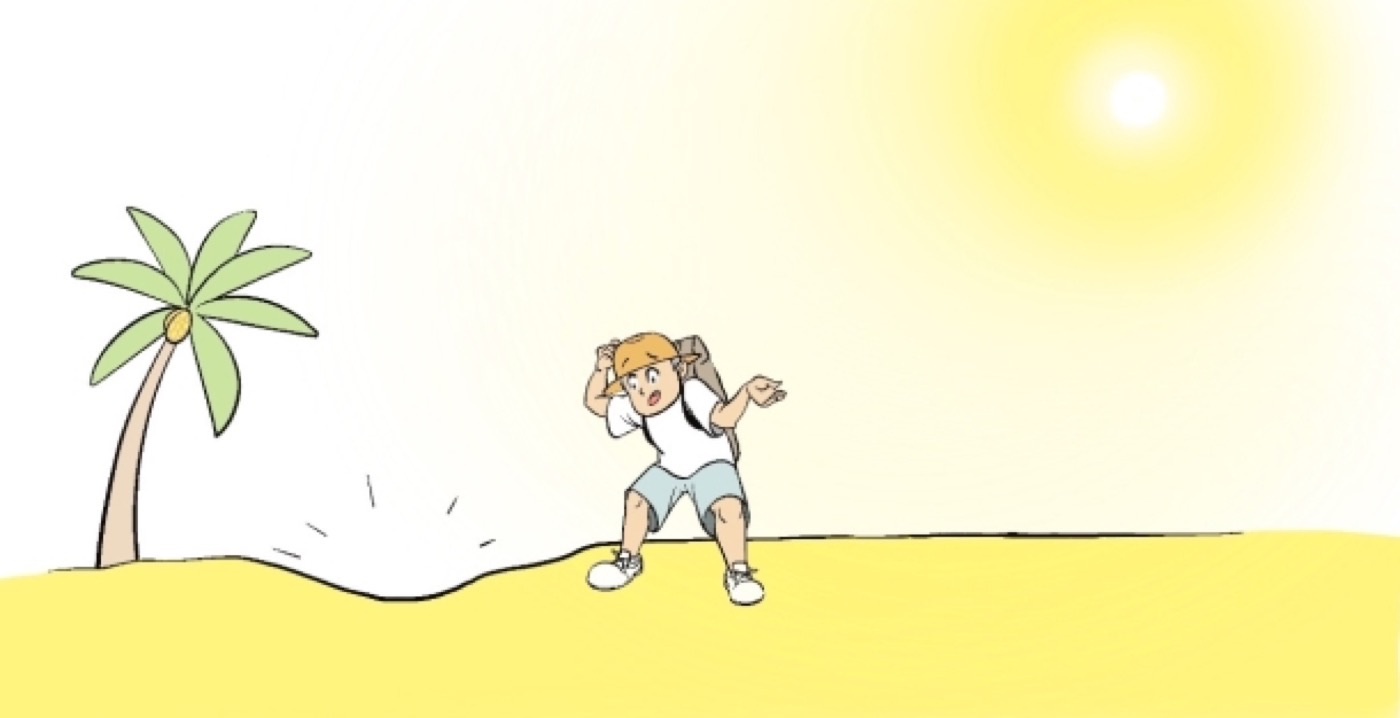
The mirage is an unreal appearance; it is an unreal superimposition on the sand. The mirage certainly appears to you, but if you walk toward it and bend down to touch the water, you will only touch the sand. The water appears but does not exist in reality.
The sand is the reality on which there is the illusory superimposition of the water. Ultimately there is only sand through and through.
Superimposition (adhyasa) is a very important concept in Advaita Vedanta. This concept is critical in understanding the interplay between the world we perceive and the Ultimate Reality that is Brahman. In this page we will introduce the concept of adhyasa to you with some examples. When you feel you have a grasp of it, keep adhyasa in your pocket as you explore the other pages of this lexicon - it will serve as a useful conceptual tool that you can pull out of your pocket and deploy from time to time.
Going a little deeper
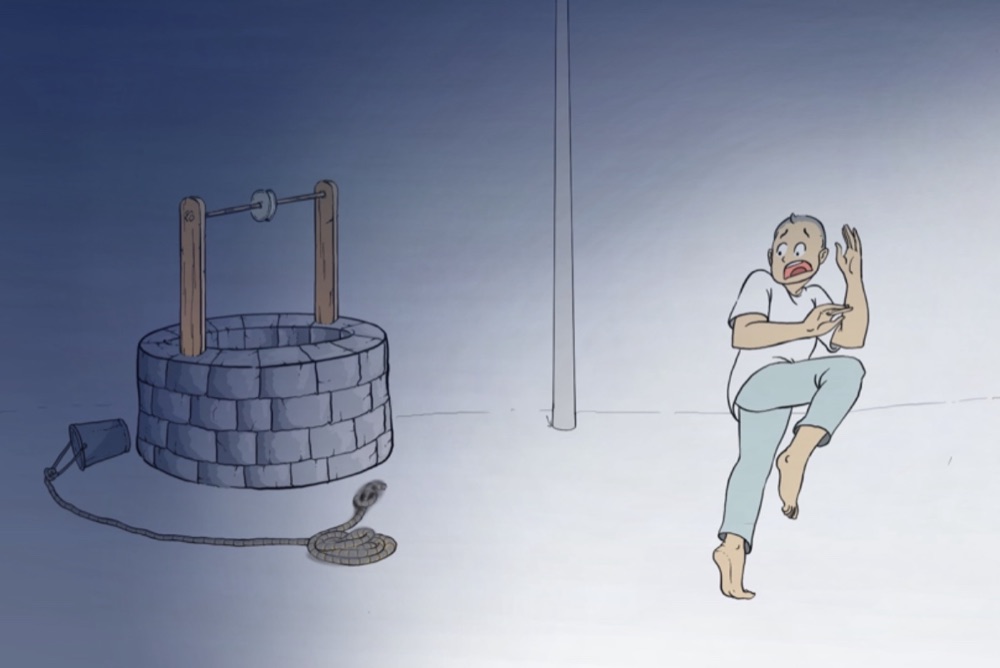
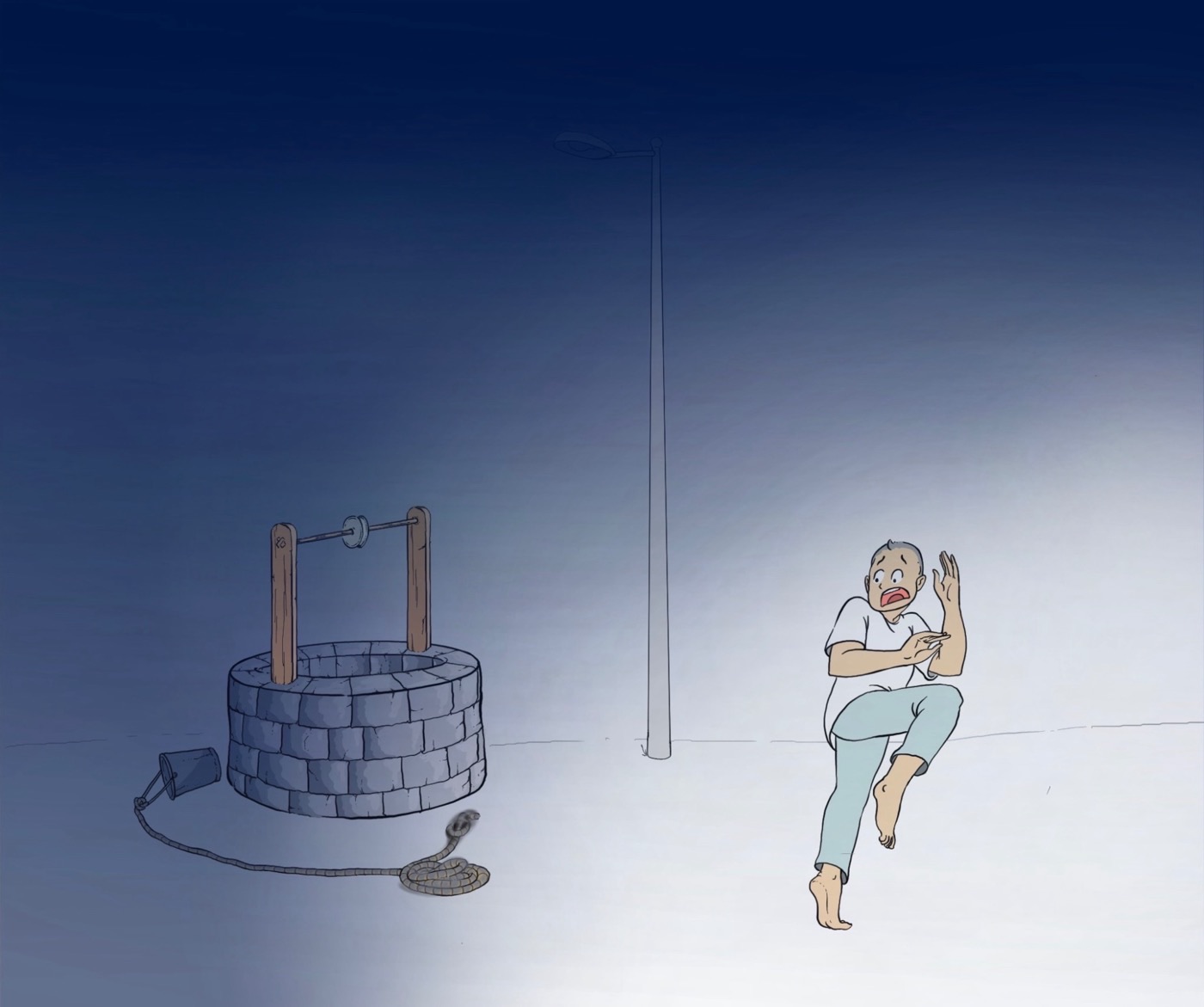
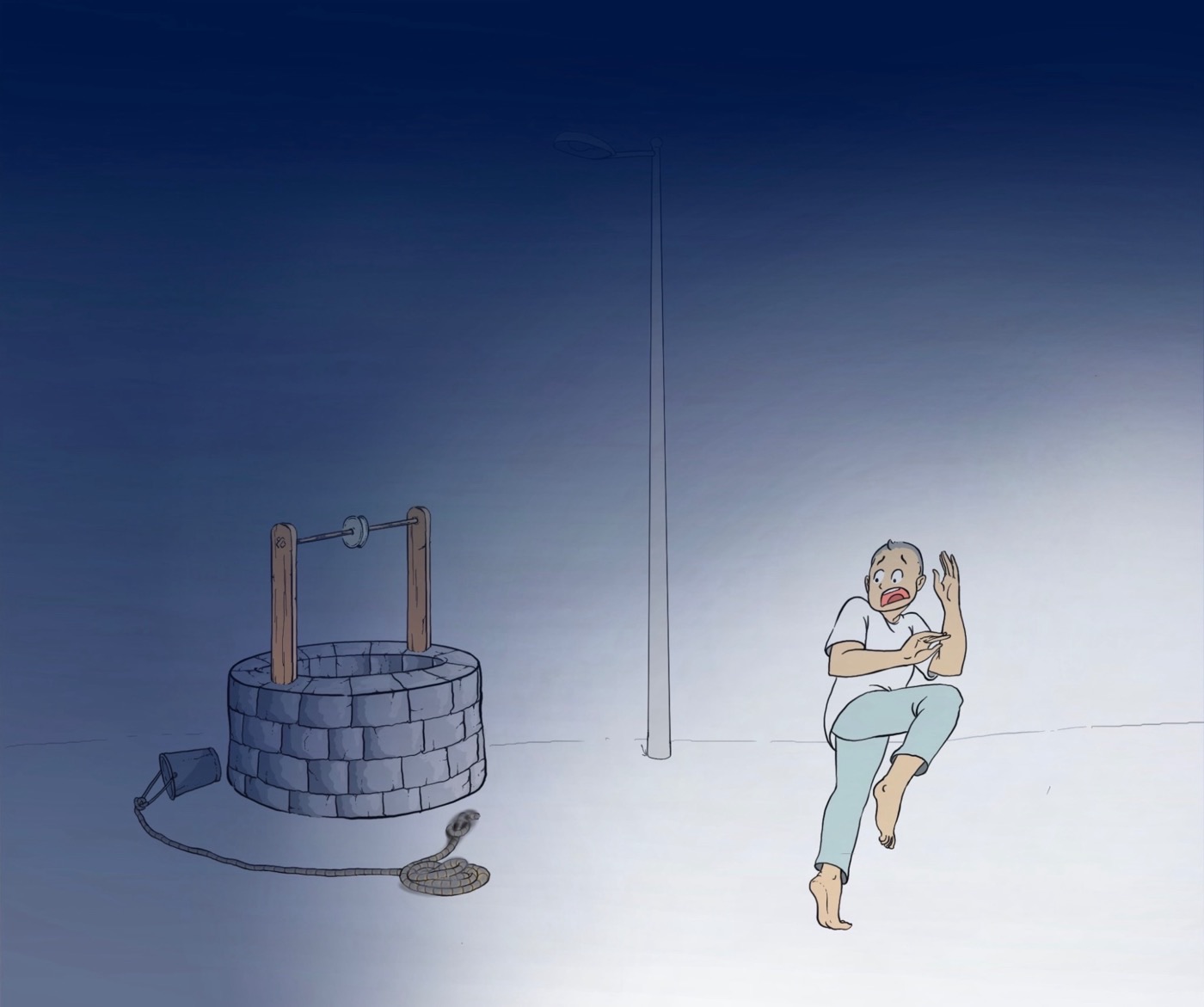
Very simply, adhyasa is the superimposition of the unreal on the real[1]. In the example above, adhyasa is the superimposition of the unreal mirage on the real sand. Another very common example used in Vedanta to illustrate adhyasa is the snake-and-rope. Walking down a street at dusk, when the sun has almost completely set and the light is dim, you see a snake in front of you! You start running away in fear. As you run a few steps away, the street lights come on. You turn around to get a clearer look at the snake under the lights, only to realize that it is not a snake at all - it is a rope. You saw a snake where there was only a rope. The snake is an unreal superimposition on the real rope[2].
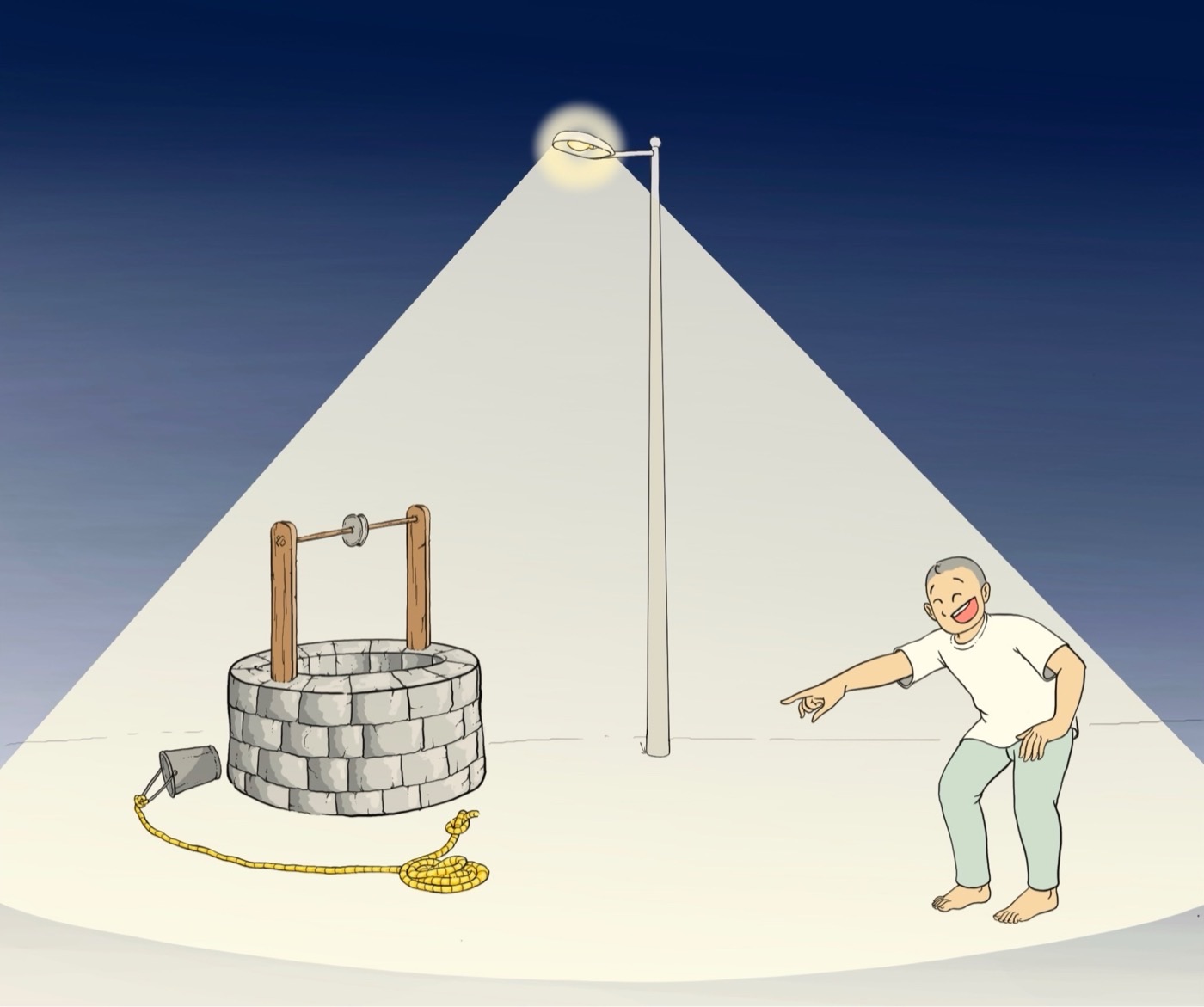
Why is all this important, you might wonder. It is important because, in Advaita Vedanta, Reality is Brahman, which is one without a second, and is Sat-chit-ananda (Existence, Consciousness, Bliss)[3] - . In other words, Brahman alone is - there is, in reality, no other entity apart from Brahman. If this is the case, what about the world we see around us right now? We see so many objects - living and nonliving, we see our own bodies and minds, we see the entire spectacular drama of the universe; if Brahman alone exists, what are all these things I see around me? The concept of Adhyasa helps understand this apparent dichotomy between the Ultimate Reality and the world that appears to us.
Adi Shankaracharya begins his monumental commentary on the Brahma Sutra with an essay on adhyasa. Subject and Object are like ‘day and night’[4], Sri Shankara writes, they have absolutely nothing in common; how then do they appear to be intertwined? You are Consciousness, the pure Subject - why do you feel like you are connected with this mind and body, so much so that you call the mind and body ‘I’? Why is it that, when we hurt our hand, we feel that we are hurt? Advaita Vedanta says that we are the Pure Consciousness to which the hand and the pain appears; Vedanta says that we are in reality untouched by the pain - you are the Observer of the pain; why do we find the Vedantic teaching so hard to realize?
Why are we so strongly and instinctively attached to our mind, body, intellect, etc.? It is due to the deep and foundational nature of adhyasa. It is because of the superimposition of body, mind, etc. on Pure Consciousness. In reality we are of the nature of chit - Consciousness; but we falsely consider ourselves to be this body and this mind because of adhyasa.
Let us try and understand the concept of adhyasa some more.
We mentioned that, fundamentally, adhyasa is the superimposition of the unreal on the real. More broadly, adhyasa can be seen as the superimposition of the qualities or attributes of one substance onto another substance, so that you perceive a substance to be what it is not. The qualities of water are superimposed on the sand; the qualities of a snake are superimposed on the rope; the qualities of a body are superimposed on your Real Self.
Sri Shankara writes, ‘Owing to an absence of discrimination between the attributes, as also between substances which are absolutely disparate, there continues a natural human behavior based on self-identification in the form of ‘I am this’ or ‘This is mine’[5]. Due to the deep-rooted nature of adhyasa, we find it hard to separate the non-Self from the Self.
Sri Shankara provides some other common examples of adhyasa. Nacre (also called ‘mother of pearl’) sometimes appears as silver; the sky appears to be curved like a dome and blue in color, while in reality it is neither a dome nor blue.
Now that the basic concept is clear, let us examine three characteristics of adhyasa. These characteristics are important to understand, since they provide us a way out of the clutches of adhyasa.
Firstly, superimposition is not real, it is apparent. Our cognition gets tricked into seeing something as some other thing[6]. Secondly, the superimposition happens on a real substance; in other words, there is a real substratum exactly where you saw the unreal superimposition. Thirdly, superimposition is due to our ignorance; the moment we gain knowledge of the real nature of things, the superimposition drops.
Let us examine each of these characteristics again. Firstly, if superimposition was real, then we would be stuck with it, there would be no way out. If the snake is real, then we better run away from it! But we need not worry since it is not real, it is the appearance of a snake on a rope.
Secondly, since the illusory appearance is present exactly where the real substance is, we need not look anywhere else to find reality - we can look at the superimposition itself as a pointer to reality! Do we need to go somewhere else to find the real rope? No, where we saw the snake, there itself is the rope. The reality of the rope is right there in front of your eyes, you just need to know how to see it.
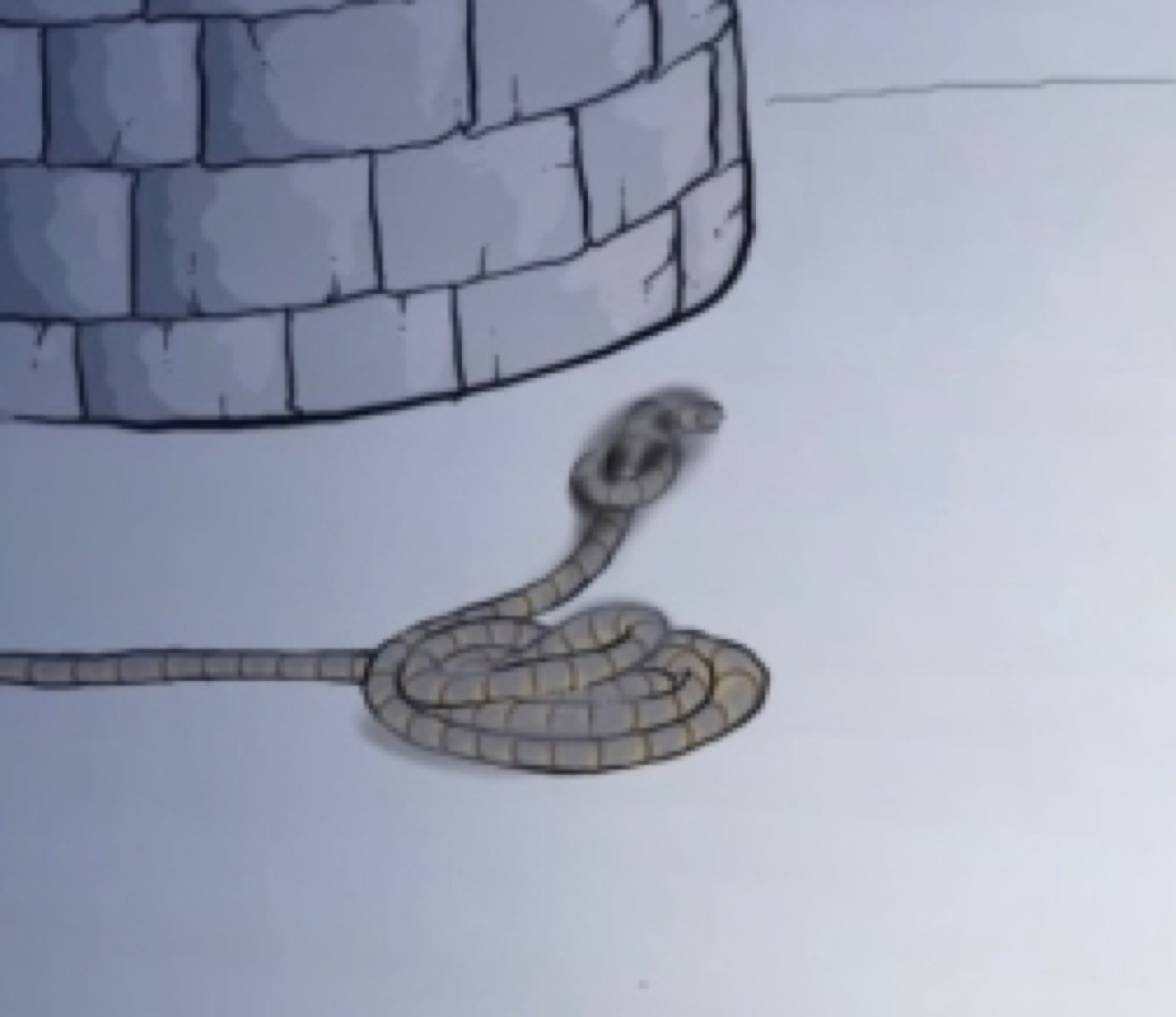
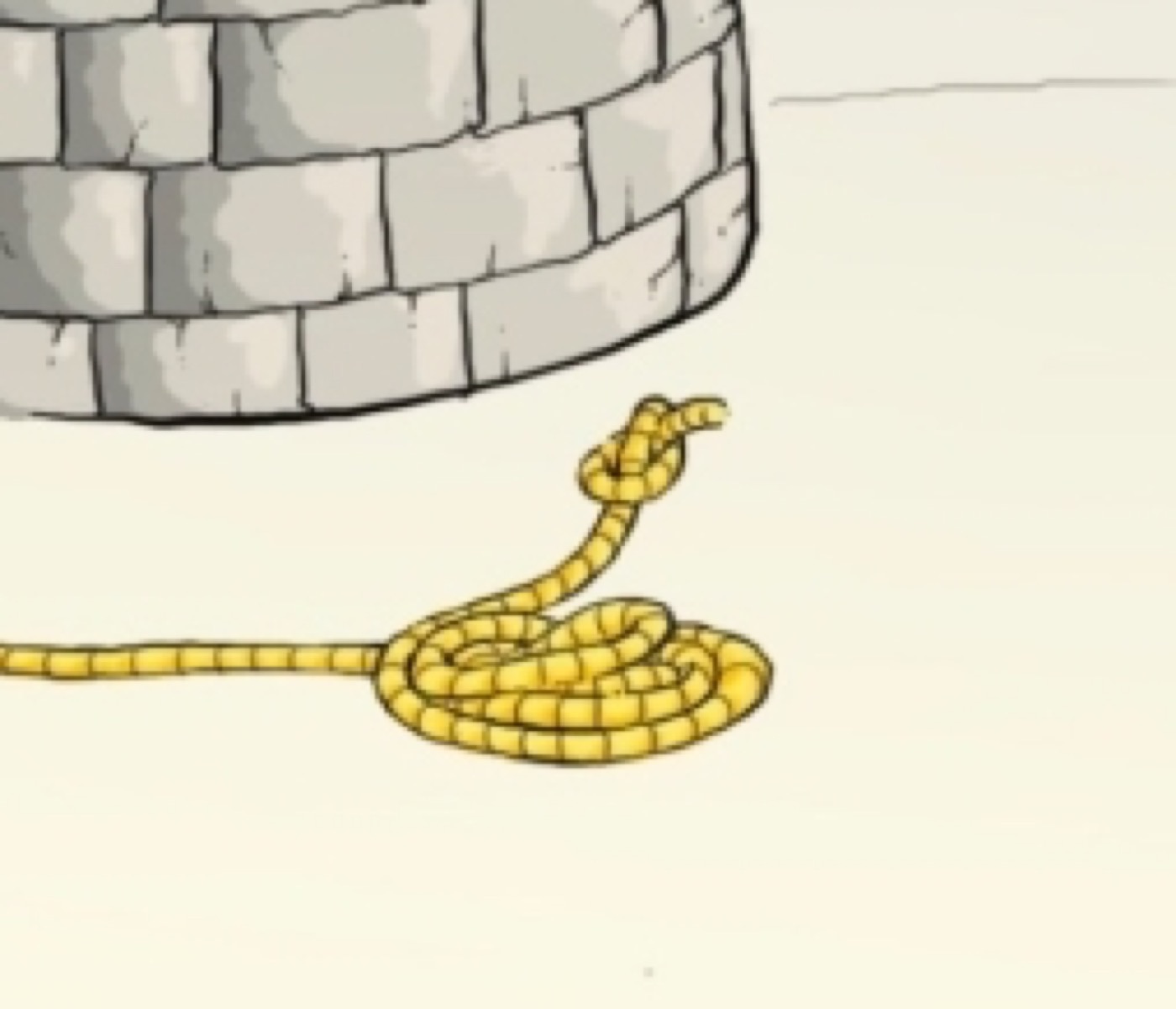
Thirdly, since the superimposition is due to ignorance, we have a clear and direct way out of the illusion - the power of the superimposition on you will drop the moment we gain knowledge. Once knowledge dawns, once I realize that what I am seeing is in fact an unreal appearance of the snake, I can continue looking at the snake knowing that it is actually a rope - it might still seem like a snake to my eyes, but all my fears are gone!
Similarly, when I realize that what I am seeing is a mirage, the magic trick will lose its power to deceive me - I will not run desperately toward the mirage for a drink of water. The mirage will still appear to me, but I will now know that it is, in reality, sand. Or to be more precise, the refraction of light through hot air above the sand. I will be able to discern the unreal (water) from the real (sand). My eyes will still see the water, but my understanding will see sand in that very same place.
Tying the threads together
Let us go back to the question we asked at the beginning of this page - if, as per the teachings of Advaita Vedanta, Brahman is the only real substance, then what is this entire world we are seeing around us, full of dualities, full of change, full of birth and death? The response to this is that the world is an unreal superimposition on Brahman. This entire world, the reality of which we take for granted, is an adhyasa! Avidya - the primal, beginningless ignorance - has resulted in us seeing the dualistic world as an appearance of Brahman.
Just as we were able to de-superimpose the snake from the rope - or the mirage from the sand - we can de-superimpose the world from Brahman. Let us do this step by step. Just as the rope exists exactly where the appearance of the snake is, Brahman - the real substratum - exists exactly where the world appears. In other words, you don’t need to go looking for Brahman outside the world; it is Brahman itself that is appearing as the world - wherever in the world you look, you are actually seeing Brahman. Just as, wherever on the snake you look, you are actually looking at the rope.
How does the de-superimposition of the snake happen? It is when you realize that ‘Ah, what I am seeing is not a snake but a rope!’. In other words, the superimposition drops when knowledge of the real substance dawns on you. Sri Shankara writes, ‘Correct discernment (samyak-vichara) shows us the true nature of a rope, and removes the painful fear caused by our deluded belief that it is a large snake.[7]’
Similarly, the de-superimposition of the world happens when you attain Brahmavidya - knowledge of Brahman. Sri Shankara writes, ‘The ascertainment of the nature of the real entity by separating the superimposed thing from it is called vidya (illumination).[8]’ When you truly understand and realize the nature of Ultimate Reality, the power of the illusion drops. You will then be able to see Reality for what it is, in all its splendor. Your eyes will continue to see the world, but you will know - not just conceptually or intellectually but naturally and instinctively - that what you are seeing is Brahman.
Knowing that only Brahman is, we still deal with the World as it presents itself to us. All our transactions continue in the world, but we now know that our own individual selves as well as the entire World is a superimposition on Brahman. This Knowledge frees us from the clutches of the World.
Even after we gain knowledge, the mirage continues to appear to us. But we now no longer get deceived, we no longer go running towards the illusory mirage; we see the mirage for what it truly is.
A person who sees Brahman in everything is a jivanmukta, the summit of the spiritual quest. Understanding the nature of adhyasa, and the way to peel off the adhyasa to reveal the reality underneath, is an important aid in the spiritual journey.
Reflect on this
Can you think of other examples of adhyasa that you have encountered recently? Do these examples fit the characteristics of adhyasa we explained above? Are you able to identify the point in time at which the knowledge of what you were actually seeing dawned on you?