
Introducing the concept
Every system of philosophy must clearly define the permitted modes of accumulating knowledge about anything; in other words, the clear rules that we must follow while building our knowledge system, brick by brick. If these guidelines are not clearly defined, then anything might be claimed to be right knowledge, and this could lead to confusion and eventually the crumbling of the philosophical edifice.
In Indian philosophical systems, these permitted modes of knowledge are called Pramana, which literally means ‘evidence’ or ‘instrument of knowledge’. Thus every philosophical system must clearly state its Pramana, and any piece of knowledge can be accepted as valid only if it is gained via one of the stated Pramana.
Vedanta accepts the following six Pramana - Pratyaksha (Direct Perception), Anumana (Inference), Upamana (Analogy), Sabda (Scriptural Statement), Arthapatti (Presumption), Anupalabdhi (Non-apprehension).
Let us take some simple examples to understand these Pramana. We will then inquire into which of the Pramanas pertain to knowledge of the World, and which ones can provide knowledge of the Absolute.
Going a little deeper
Pramana 1 - Pratyaksha (Perception)
This pertains to knowledge gained by direct perception via our sense organs. We gain knowledge about something when we directly experience it - when we see or feel or smell or hear or taste it.
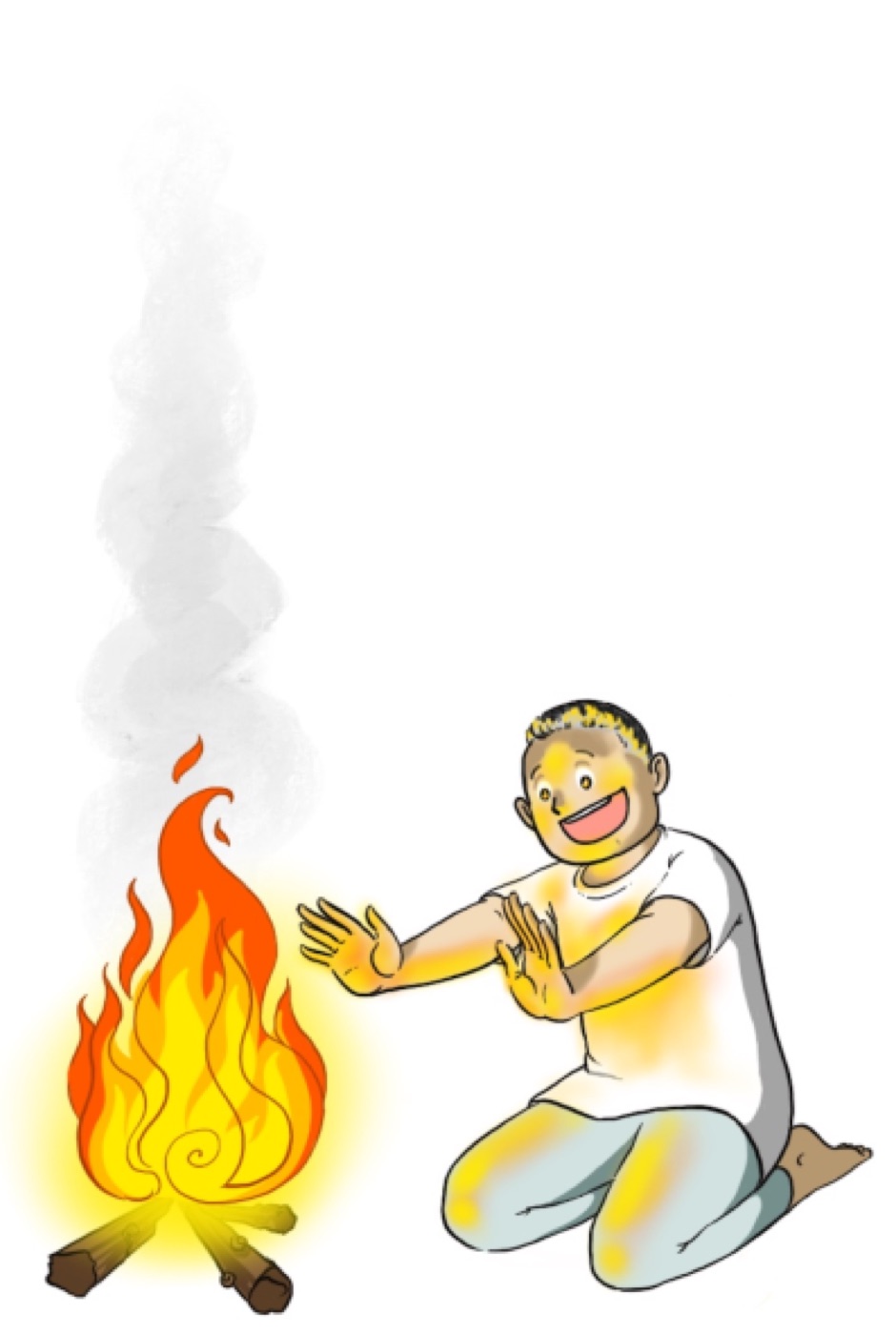
You know that there is a fire in front of you because you can see the flames, you can perhaps hear the crackling of the firewood. And if you are adventurous enough, you can extend your hand out and feel the burning heat from the flames. You thus have knowledge that there is a fire through the Pratyaksha Pramana.
Pramana 2 - Anumana (Inference)
This is related to knowledge gained due to inference, when there is an invariable concomitance between two events. When there is a causal connection between two events A and B, and if we directly perceive A, then we also have knowledge of B (even though we do not directly perceive B).
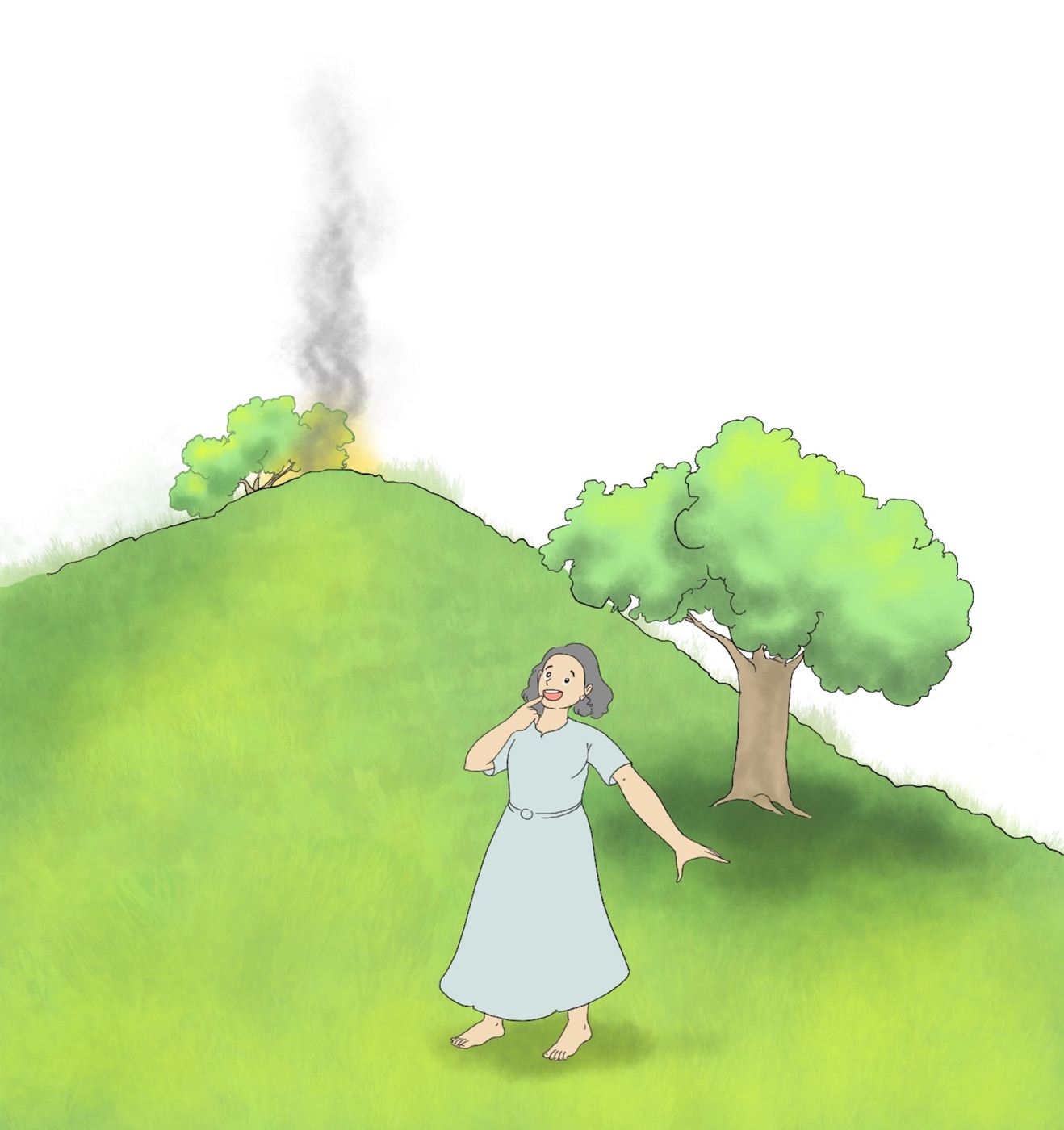
When you see smoke rising from the top of a hill, you infer that there is a fire burning on the hilltop. You cannot see the fire, but the direct perception of smoke along with fire in multiple past instances gives you the confidence that there is a tight connection - an invariable concomitance - between smoke and fire.
We gain knowledge by inference all the time. By looking at footmarks on the mud we know that somebody must have walked through this path. By seeing the light switched on at home, you know that someone must have entered it.
Pramana 3 - Upamana (Analogy)
This is where you gain knowledge about something previously unknown to you (A) due to its similarity with something that you already know about (B). You know B (you might have gained knowledge of B, say, by Pratyaksha Pramana in the past), and you are able to get knowledge of A due to the fact that some of its characteristics are similar to B.
A common example given is this. Let us say you have never seen a wild ox, so you don’t know what it is. Someone describing it to you will say that it resembles a cow, but more aggressive and with a big horn on its forehead. You will now be able to easily identify a wild ox if you see one.
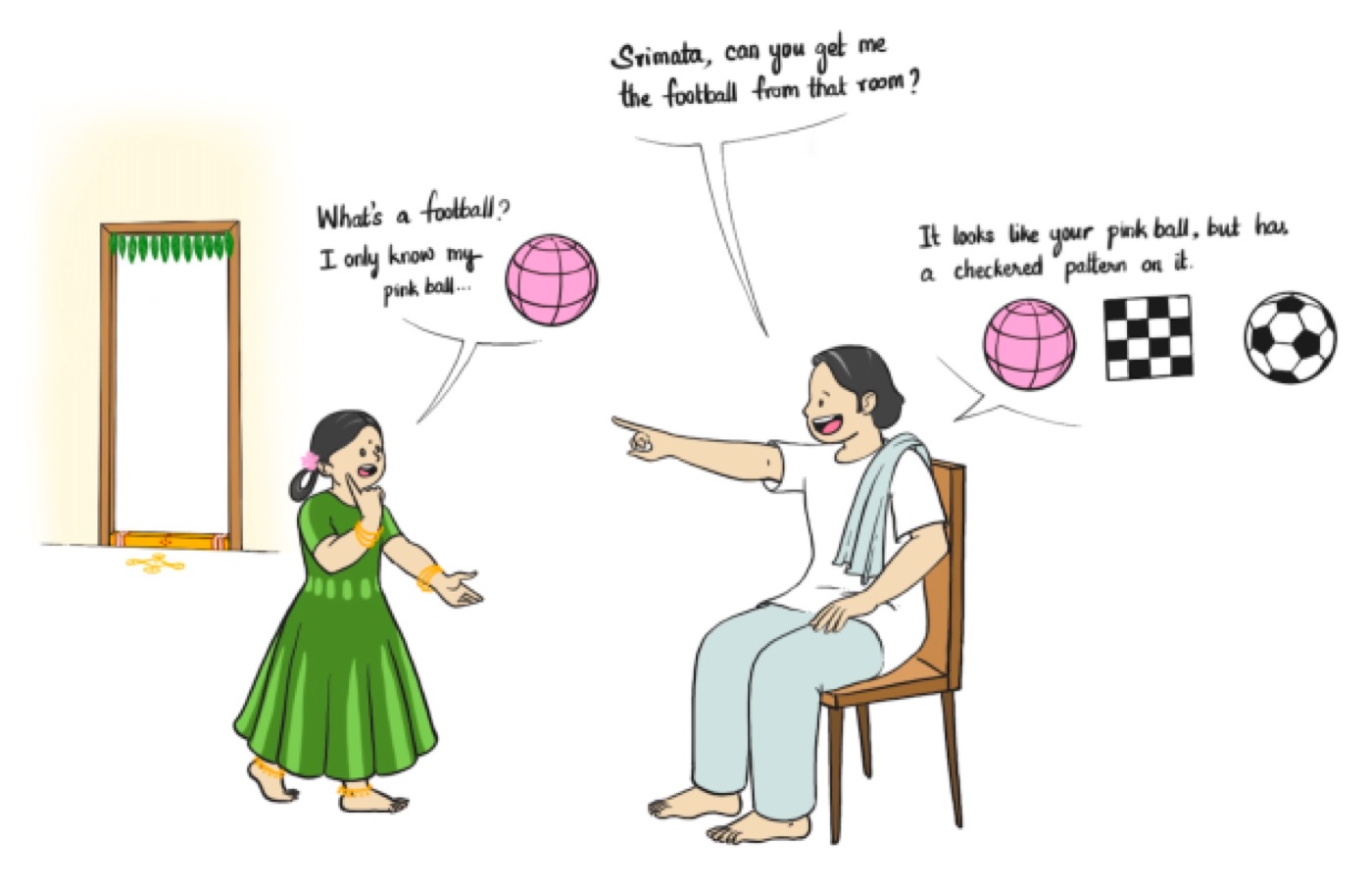
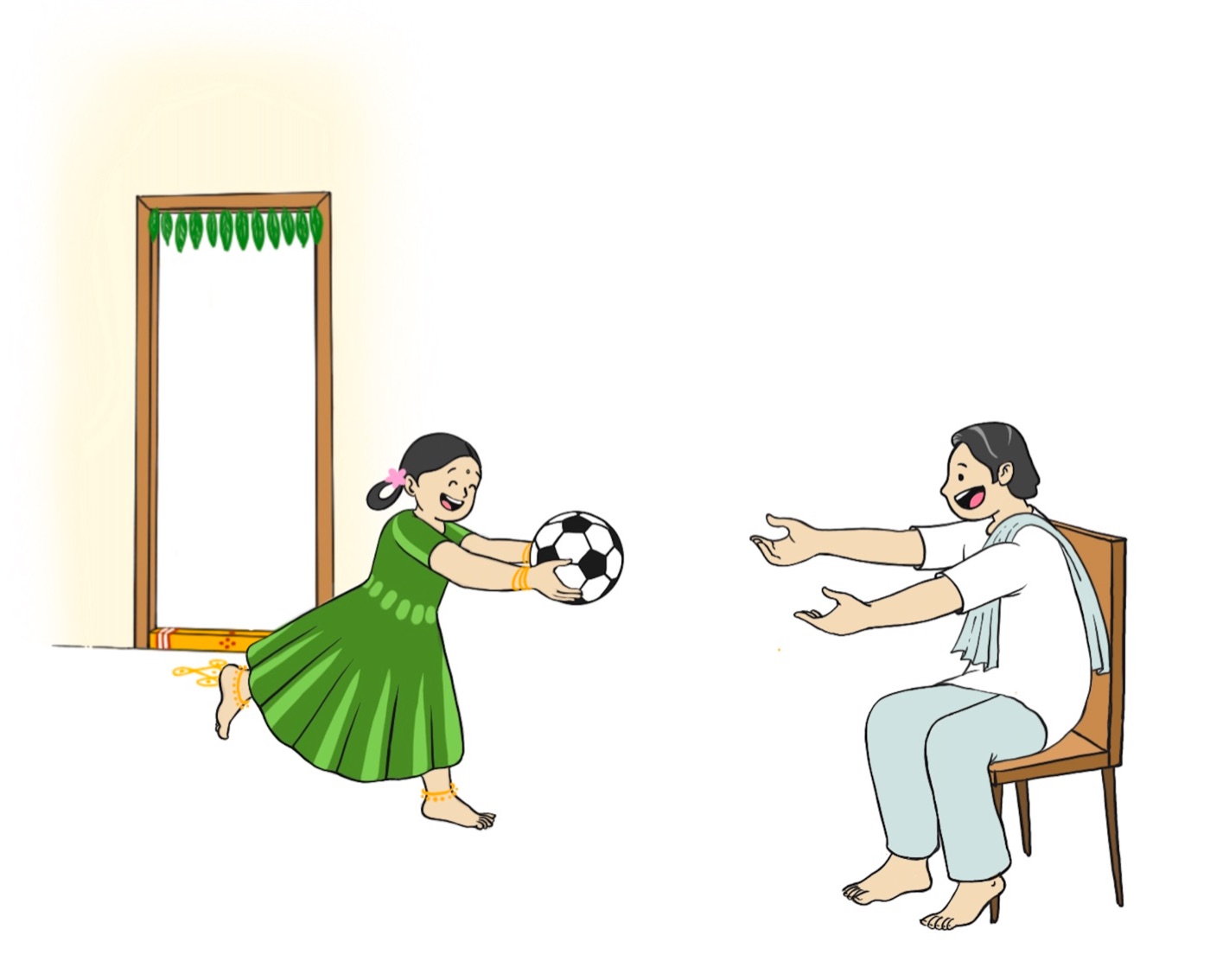
Let us say you want a toddler to bring a football to you from the other room. The toddler does not know what a football is, but she does often play with a large plastic ball. You explain to the toddler that the football looks like her plastic ball, but with black and white patterns on it. The toddler comes back to you with the football in her hands. The similarity to the known object (the plastic ball) helped the toddler gain knowledge about the previously unknown object (the football).
Pramana 4 - Sabda (Scriptural Statement)
This relates to knowledge that is accepted as true since it comes from a superior and certified authority. Though there might be some areas where we have direct expertise, there is no way we can gain direct knowledge and experience about everything in this world. When it comes to areas we do not have expertise in, we go by the word (‘Sabda’) or testimony of the experts in those fields. This is why you visit the doctor when you are sick, and take the medication that they prescribe for you.
When it comes to questions regarding Ultimate Reality, Vedanta and all other orthodox Hindu systems consider the Veda (Sruthi) to be the final authority. Statements from the Veda (which include the Upanishads) can be used to clinch a metaphysical argument.
All other Pramanas, between them, help you gain all the knowledge you can get about objects in the world, but it is only Sabda that provides you knowledge of the Self. The Sruthi is the Pramana about Brahman.
Of course, since only the orthodox Hindu schools (the Astika schools) accept the Veda as a valid Pramana, the scriptures cannot be used when arguing against someone from, say, a Buddhist school. More on this later.
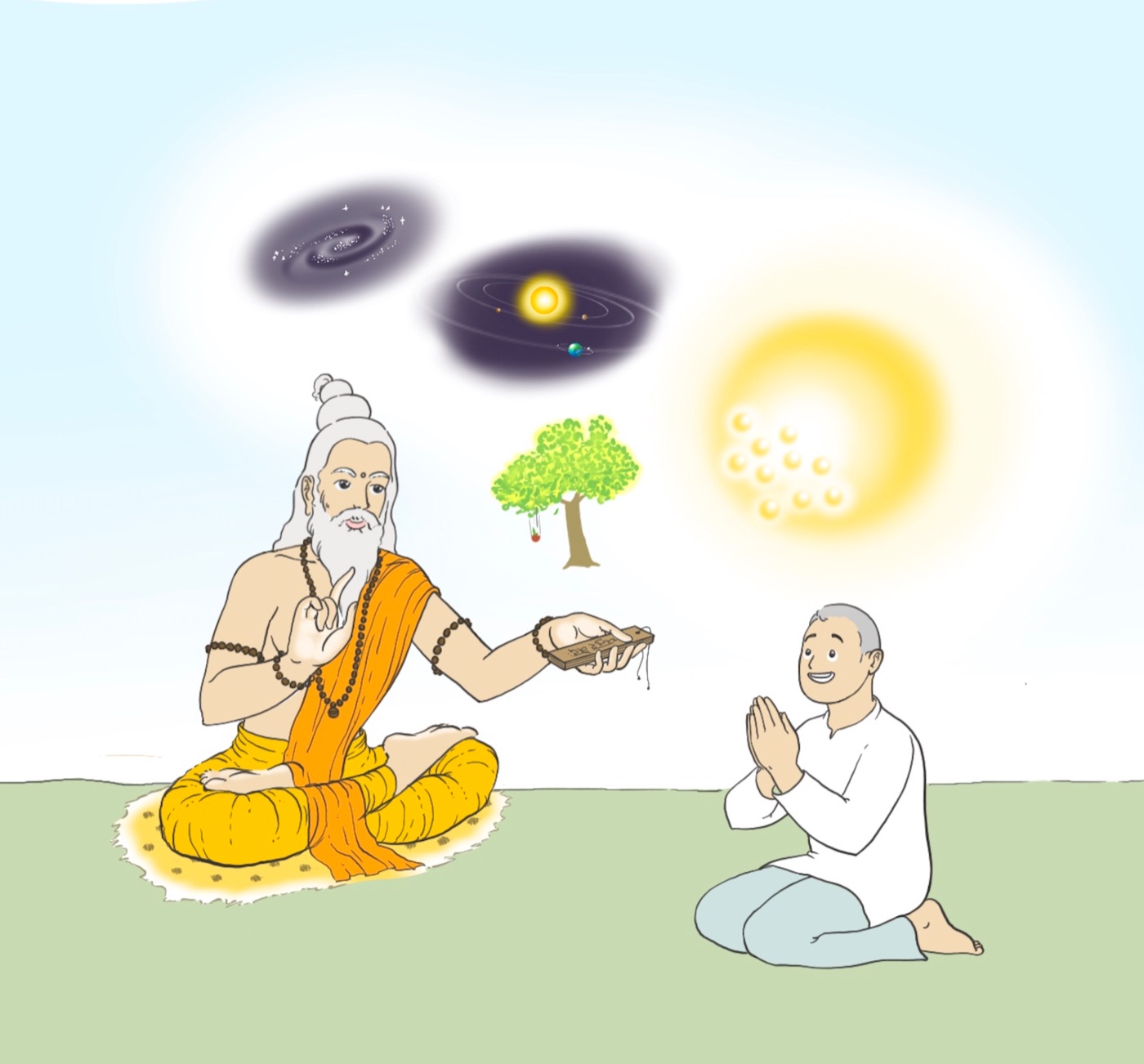
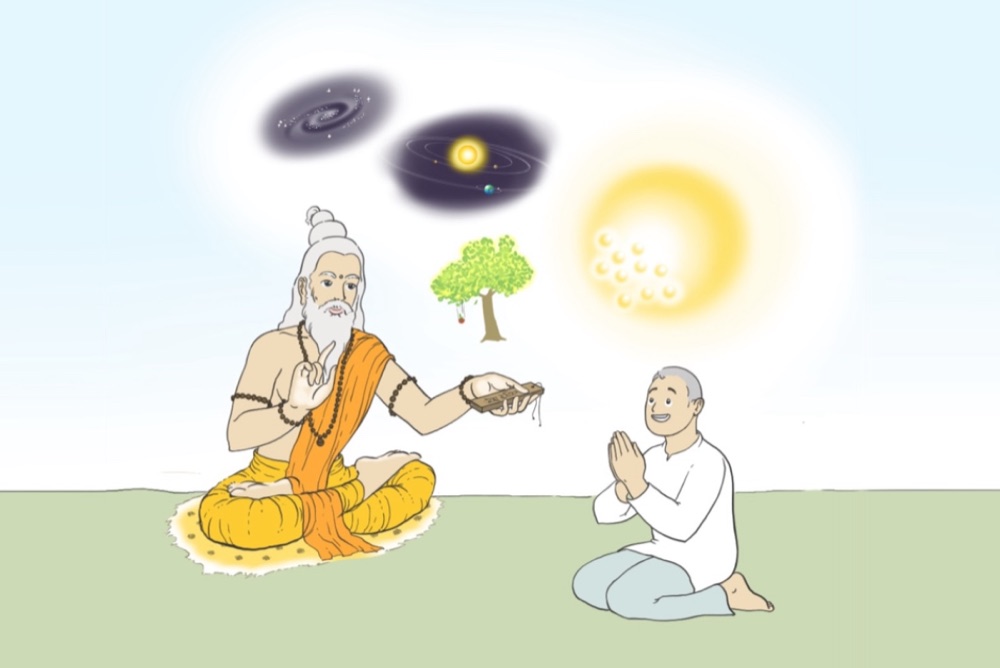
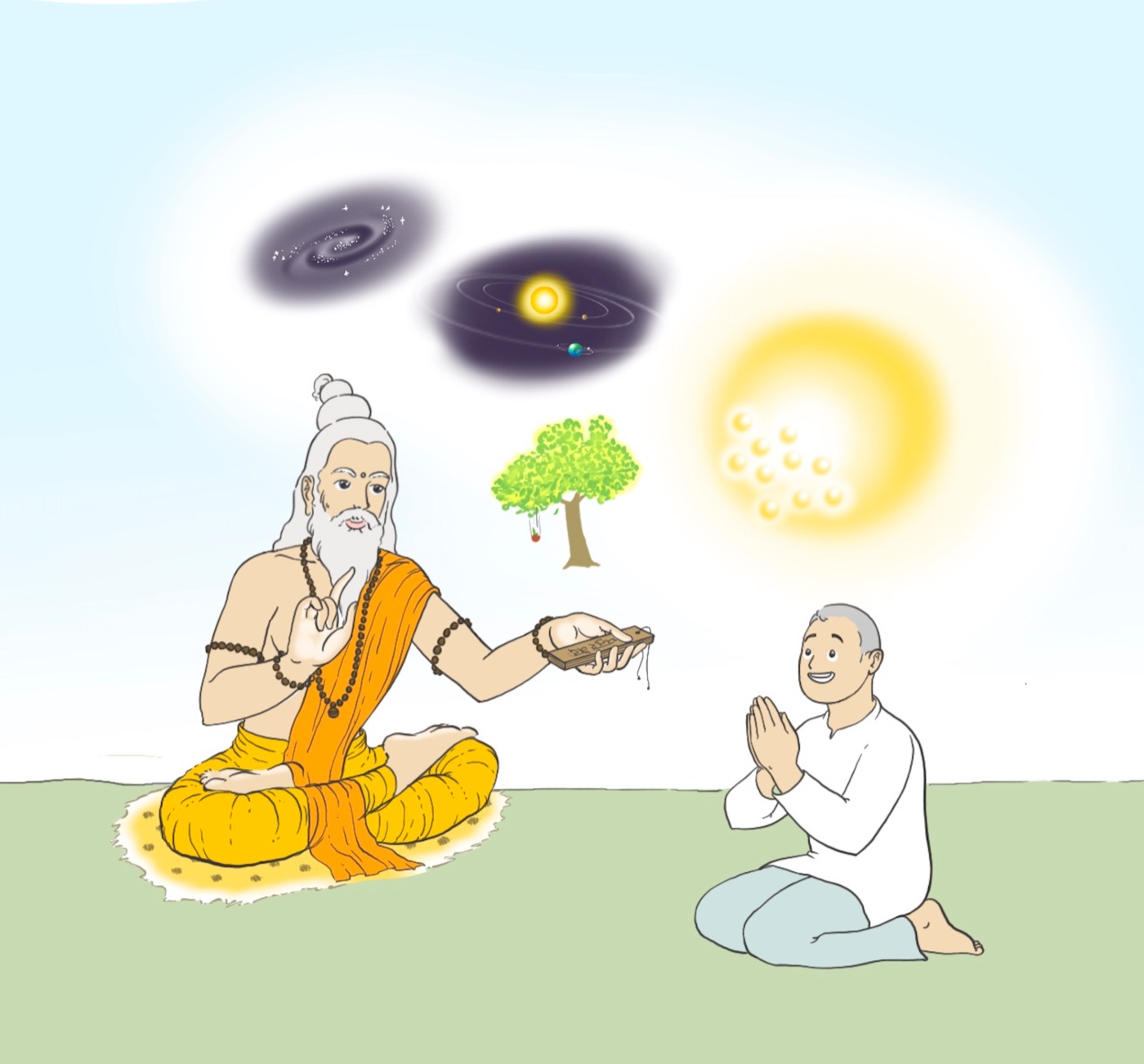
A Guru explains his disciple, the principles of this Universe: talking about the galaxy, solar system, gravity and the relationship of many jivatmans (souls) to the Paramatman (Brahman)
Pramana 5 - Arthapatti (Presumption)
This pertains to knowledge that is gathered as a derivation from the given circumstances. In legal terms, this is what could be called ‘circumstantial evidence’. If there is a set of observed facts (‘Set A’) that seems to present a ‘knot’ or a logical inconsistency, and if this knot can be resolved only if another fact (‘Fact B’) is presumed to be true, then Fact B is accepted as true. This new fact helps to click the other facts together into a clean picture.
This will be easier to understand with some examples. A commonly used one in the texts is the following - take these two observed facts - ‘Devadatta is overweight’ and ‘Devadatta does not eat during the day’. The only way to resolve the knot posed by these two facts is if we say ‘Then Devadatta must be eating at night’.
Here’s another one. You tell your friend (friend A) a secret, and ask them to keep it to themselves. A few days later, you overhear another friend (friend B) mention this same secret to someone else. The circumstantial evidence points to the fact that friend A broke the promise she made to you and told friend B the secret.
As you can see, Arthapatti is not always water-tight; it involves deduction like the sort a detective or criminal investigator would do. But when other modes of knowledge are not available, Arthapatti is accepted as a valid Pramana.
Pramana 6 - Anupalabdhi (Non-apprehension)
This is an interesting one. Anupalabdi is invoked when the absence of something is a valid piece of knowledge. In Vedanta the absence of an object too can represent a separate movement of the mind. This is not for all objects, but ones where their presence - and hence their absence - is tangible; the absence of these objects is itself a felt presence, and is considered new knowledge you have gained.
For example, if one coin in a large bag of coins is missing, you might not even notice it. But if the bag itself is missing from the place you left it at, the absence tells you that something is afoot. This is knowledge gained via Anupalabdhi; in a sense, you actually see the absence of the bag of coins.
You enter a room to find the flower vase missing from the place it usually is. This strikes you as suspicious. If no one was supposed to have been home when you were out, how could the flower pot have moved? Thus the non-apprehension of the flower vase provides you valid knowledge about the situation, knowledge that will enable you to take the right course of action.
When someone close to you passes away, their absence is felt, is it not? In the next family gathering after their passing, everyone notices the absence of this person; the absence is a heavy presence in the room, and plays a role in how people feel and how they interact with each other in the gathering. This is Anupalabhi.
Tying the threads together
The philosophy of Advaita Vedanta constantly operates at two levels - Vyavaharika and Paramarthika. These represent two levels of reality - the transactional or relative reality (Vyavaharika) and the Ultimate or Absolute Reality (Paramarthika). Vyavaharika reality consists of the World that appears to us, and the Paramarthika reality is the substratum of the World that appears, which is Brahman.
Five of the six Pramana we just spoke about pertain to Vyavaharika knowledge, in other words they provide us knowledge of things in the World. These are - Pratyaksha, Anumana, Upamana, Arthapatti, and Anupalabdhi. But none of these Pramana can provide us knowledge of the Absolute. If you have read our page on Brahman, you will know that It is beyond qualities, beyond the reach of words and concepts. Thus we cannot know Brahman by these five Pramana, since these five modes of knowledge are constructed on things in the World.
The only Pramana that provides authoritative knowledge of Brahman is Sabda, in particular the Upanishads, and even more particularly the Mahavakyas present in the Upanishads. You can explore our page on the Mahavakyas, which represent the final teaching, the Highest Knowledge in Advaita Vedanta, when you have gained a good understanding of the foundational concepts of the philosophy.
Reflect on this
We had mentioned earlier that only the Hindu Astika systems accept the Veda (Sabda) as valid Pramana. What happens when a Hindu philosopher engages in a conversation or debate with someone from one of the Nastika schools of Indian philosophy (who will not accept the Veda as authoritative), such as Buddhism and Jainism?
In such cases he or she will have to restrict their logical arguments to the other five Pramanas, or more precisely the subset of Pramana that is commonly accepted by both parties.
Let us take this argument even further. A sharp logician might question all the Pramanas; he or she might ask if there is any knowledge at all that is indisputably true, if there is anything at all that cannot be doubted. Even Pratyaksha, which is the most direct of the Pramanas, provides you knowledge mediated by your senses; even Pratyaksha is indirect knowledge. What if your senses are deceiving you? What if you are hallucinating? What if you are seeing a mirage and thinking it to be water?
Is there anything that cannot be doubted? Yes there is. There is one thing that you know directly, without mediation, without any possibility of doubt. It is via this that you gain all other types of knowledge; it is beyond Pramana because it is the ground of all Pramanas. And it is this one direct and indisputable knowledge that the entirety of Advaita Vedanta is this. What is it?