

Introducing the concept
The concepts of ‘substance’ and ‘attribute’ are fundamental building blocks in all of philosophy. Understanding what we mean by ‘substance’ and ‘attribute’, and then probing into the nature of ‘substance’, are important steps for every student of Vedanta. While the terms might seem technical, what they point to is simple. Let us try to understand. Let us say you can see a table in front of you. That table goes through changes over time, does it not? It goes through wear and tear, perhaps there are repairs done to it over the years - a new coat of paint, a replacement of a broken leg. The table goes through various configurations over the course of its life, but you would still say that it is the same table, is it not?
‘This table has had a new coat of paint - it used to be brown, now it is black’, ‘This table now only has three legs, the fourth one needs to be replaced’ - Phrases we use like this indicate that we take for granted that there is something that remains constant - which we here called ‘the table’ - that stays through all the changes that occur to the object over time.
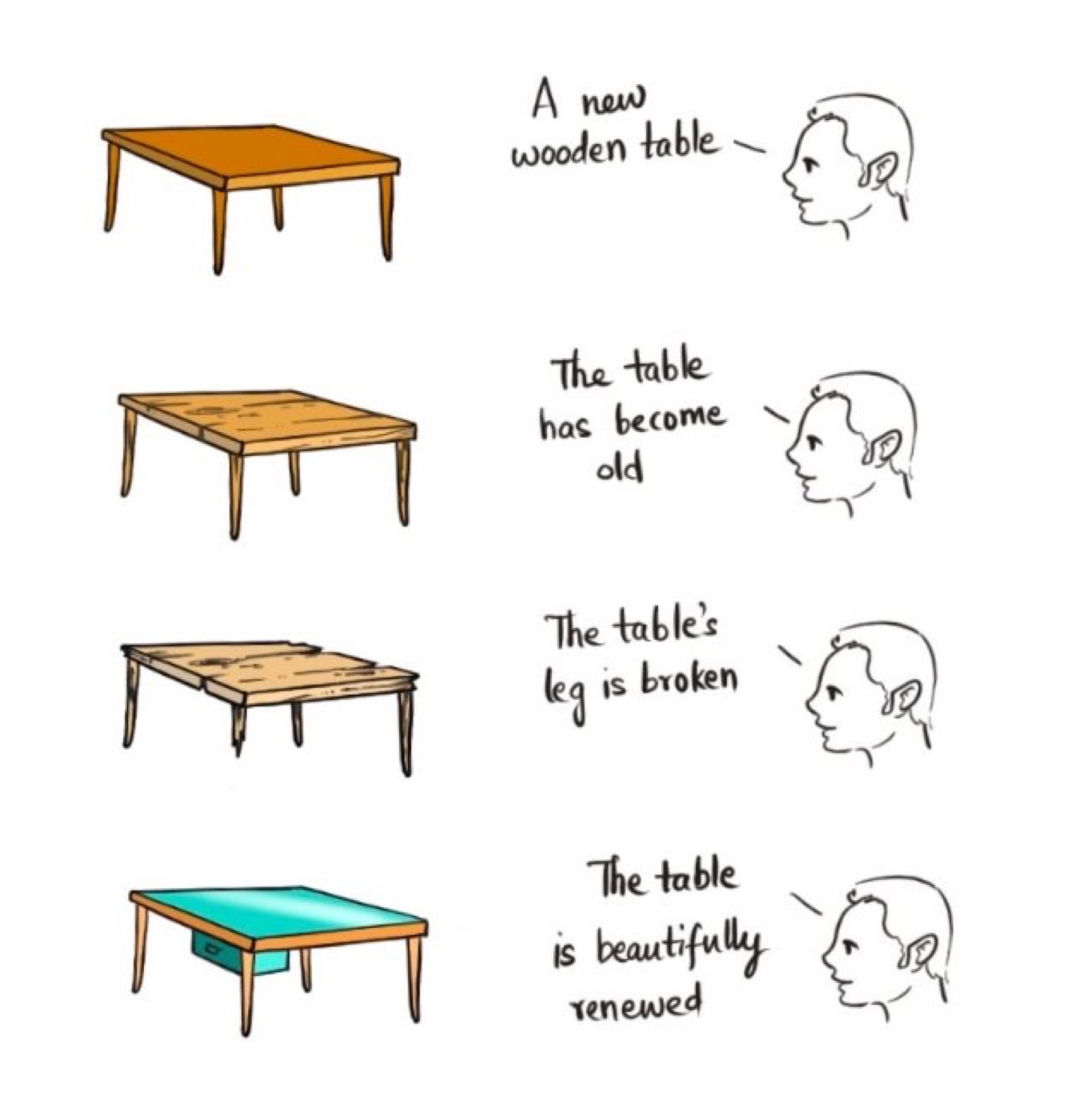
This essence of an object that provides the identity to the object is called the ‘substance’. If I repaint the table it changes from a ‘brown table’ to a ‘black table’, but it is still a table, it doesn't change into a car or a computer. What is it that makes this the same table, despite changing properties? Think about this. In this very simple illustration, the ‘substance’ is that which is pointed to by the term ‘table’, and attached onto the substance are the ‘attributes’ of the table such as ‘brown’, ‘black’, ‘rectangular’, ‘heavy’, ‘old’, etc.
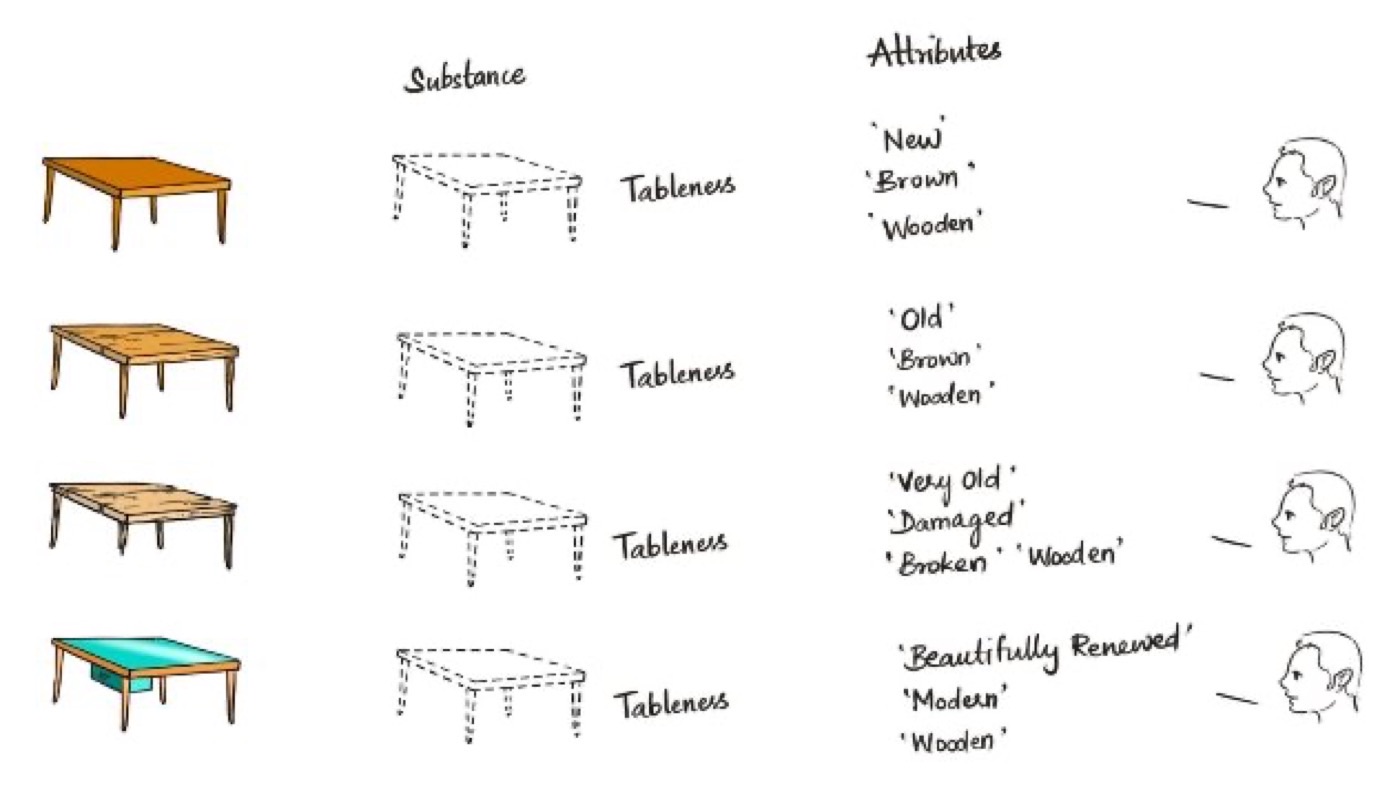
You can take anything around you and try to separate it into ‘substance’ (dravya) and ‘attributes’ (guna). You might be sitting in a slightly chilly room - turn the fan or air conditioning off, and it is now a warm room. The room goes through changes in temperate. ‘Chilly’, ‘warm’ -> attributes; ‘Room’ -> substance.
Going a little deeper
How is all this connected to Vedanta, you might wonder. We will get to that very shortly. But before that, let us further examine the very loose definition of dravya-guna we provided above. You might find that substance and attribute are tied into an inextricable embrace. You cannot conceive of the substance without attributes, and attributes have no meaning unless they are attached to a substance.
Take our very same table - does it make any sense to speak of a table without bringing in any of its properties? We have to use some properties to refer to the table - large, small, black, brown, old, new, etc. If you just say ‘table’, people will ask you ‘which table are you talking about?,’ and then you will have to refer to it along with its properties ‘the black table that is in this room’. It makes no sense to refer to the substance of an object without also invoking some of its attributes.
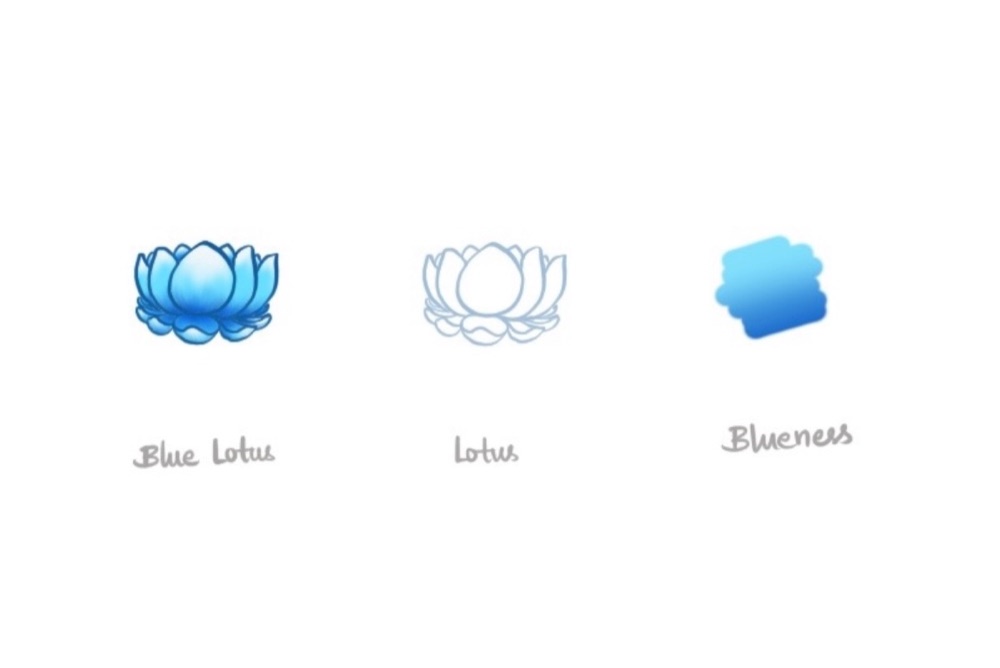
Similarly, all properties get their existence only when affixed with a substance. Consider a blue lotus. If one just says ‘blue’, it does not mean much - what is it that is blue? Or in other words, what is the substance to which one of the properties is ‘blue’? We then respond that ‘the lotus is blue’.
‘Blue’ does not exist apart from the underlying lotus, and ‘Lotus’ cannot be objectified - cannot be firmly pointed to - without ‘blue’. Blue and Lotus - Attribute and Substance - tied together in an inseparable embrace.


Similarly, when you think of fire, you think of heat together with it. They cannot be separated.
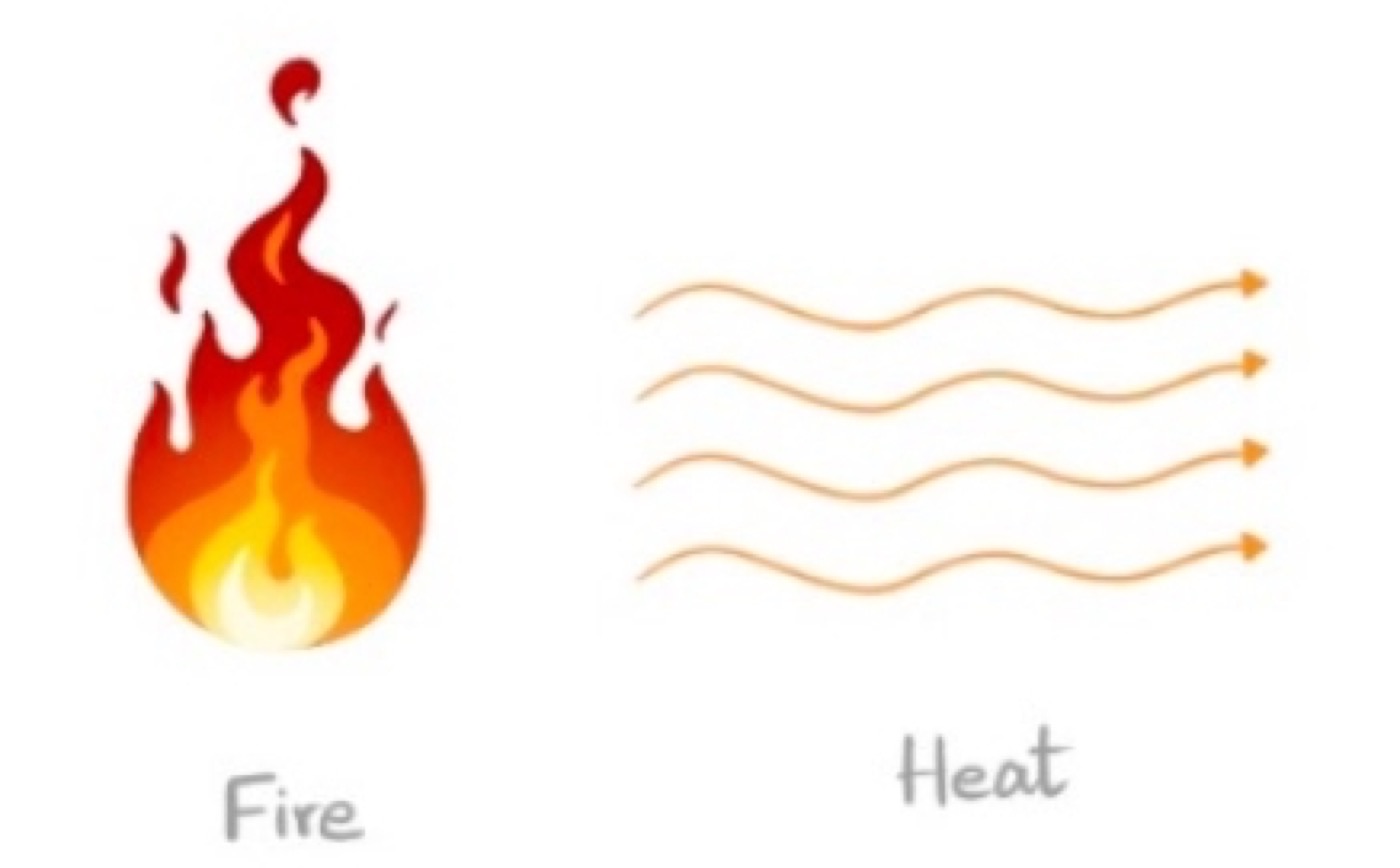
In a sense, it is the attributes that define and distinguish a substance, and it is the substance that provides existence to attributes. If you are following us so far, let us proceed.
Ask yourself next - where is the dividing line between one substance and another? Or to put it differently, at what point can you clearly say that one object ends and another object begins? Let us say that we are going to be turning the table into a few chairs. What is the exact point at which the table turns into logs of wood, and what is the exact point at which the logs of wood turn into chairs? Can we ever say this with precision?
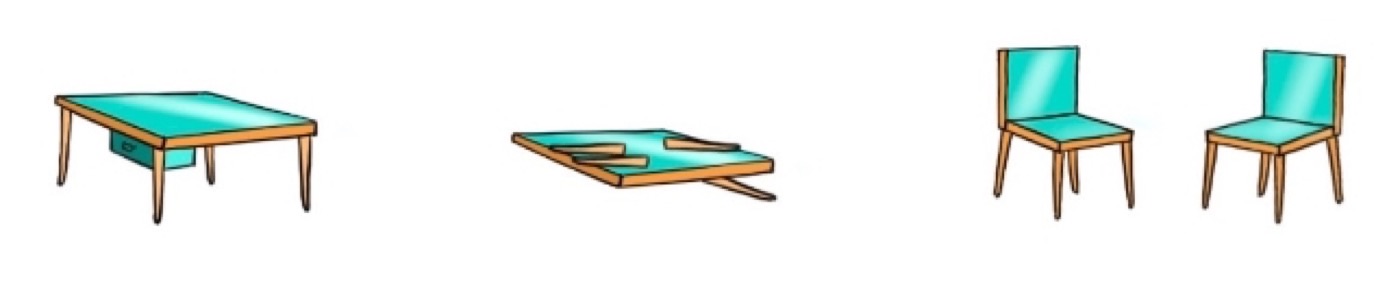
Table Wood Chairs
What Vedanta says is that instead of focusing on the apparent differences between one object and another, find the underlying unity that binds them together. What is the common substance to the table, the chair, the logs of wood - it is wood itself. I can turn it into wooden objects of any shape, objects that can be used for various purposes, but it is ultimately wood and wood alone.
If you are thinking about this carefully, you might have further questions about placing ‘wood’ as the substance to all wooden objects. What if we broke the table into fine dust and then blew the dust away - where is the substance ‘wood’ now? Or what if we put the wood through some chemical process and turned it into something entirely different, such as burning it and making it into charcoal? Will the substance ‘wood' remain the same through all these changes or will it change - if it changes, when will the transition from one substance to another exactly happen?
Tying the threads together
If you have come so far, you are ready to take the true Vedantic perspective. You will never be able to draw accurate lines of distinction between one substance and another. Instead, what if you zoom out and view the entirety of the world - all possible objects in the universe, everything that you can possibly conceive of - and ask yourself: ‘Is there a common essence to all of this? Is there a substance underlying everything in the world?’ Vedanta's answer is ‘Yes, there is a substance underlying all this apparent diversity. Yes, there is a common substratum, the ground or foundation, to everything in the observable and knowable world.’
What is this substance that is common to all existing things? It is existence itself, sat. Visit our page on Sat (Existence) to explore this in more detail.
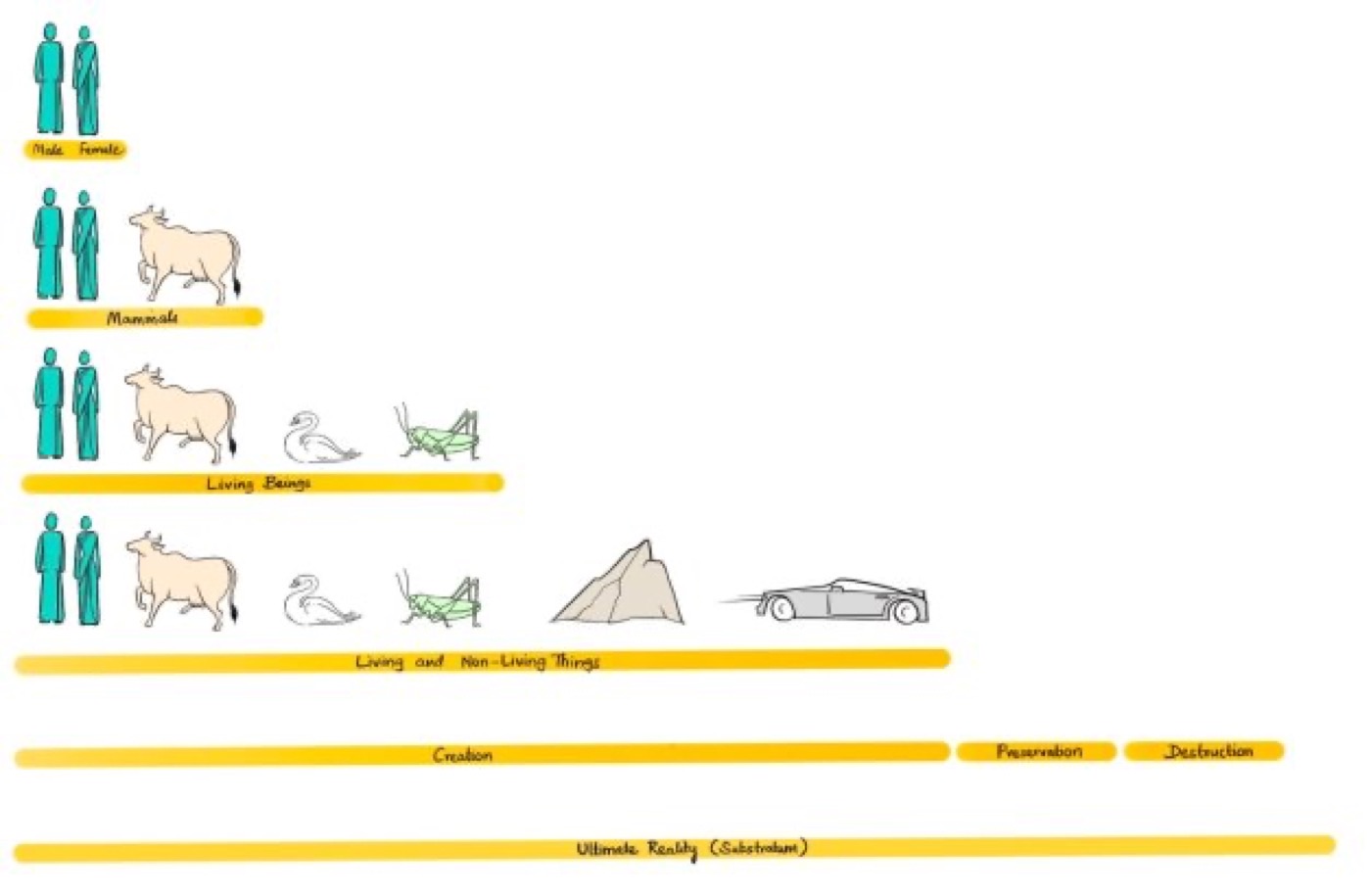
Image: Generalizing male and female - we have a common category called mammals which give birth to a child. Generalizing further we can consider mammals, birds and insects as living beings. Further generalizing includes living and non-living beings. One more step of generalization takes us to creation of these living and non-living beings, and at the level of creation there is preservation and destruction. These creation, preservation and destruction are based on the substratum of ultimate reality - Parabrahman.
The table exists, the chair exists, the logs of wood exist, the saw dust exists… Common to all of these objects is existence - sat - itself. This same sat can be found when we zoom out and look at the world as a whole, or when we zoom in and look at an individual existing thing - macrocosm and microcosm, large and small, living and nonliving, physical objects or subtle objects (your thoughts, emotions, etc.) - sat is the substance of them all.
All the qualities that seem to distinguish one object from another are attributes to this substance. The qualities that make you say ‘this is a table’ or ‘this is a chair’ (the shape, the color, the weight, etc.) are the attributes sitting on top of the substance that is sat. But wherever we look on the chair, what I am actually seeing is the wood. Similarly, wherever we look in the world, what we are actually seeing is sat - i.e. Existence.
Reflect on this
Look at the objects in the world around you right now and try to conceptually separate them out into substance and attributes. Try to group objects together and identify the common substance to all of them - what is it that is common to all cars (the ‘car ness’), what is it that is common to all wooden objects? And then gradually step back and bring your mind to the substratum of everything that you see around you.
We will leave you with two questions for reflection.
Firstly, if Existence - sat - is the common substance to all objects, then are the attributes any different from the substance itself? Do the attributes have independent reality apart from the substance?
Secondly, on this page we have focused our discussion on objects in this world. But how do you fit into this substance-attribute framework? What is the relation between the knowing subject - i.e. you - and the fundamental substance that is sat?
These questions point to the ultimate truth in Advaita Vedanta. You will find answers to all of these questions as you explore this lexicon. When you begin to have a grasp of the concepts explained on this page, continue your exploration by clicking on the connected pages.