
Introducing the concept
Who can study Vedanta? What are the prerequisites that a student of Vedanta must possess, in order for their study to result in the desired outcome of full spiritual realization?
The short answer is that anyone who has the urge to seek answers to the ultimate questions is qualified to embark on the study of Vedanta; anyone who asks ‘Who am I?’ and desires to probe into the real nature of their Self is qualified to study Vedanta; anyone who looks up at the stars and asks ‘Where did all of this come from?’ is qualified to study Vedanta.
Indeed we all can - and must - embark on the study of Vedanta. But even if we gain an understanding of the concepts taught by Vedanta, many of us might find it hard to realize the teachings. In other words, it might make sense intellectually, but the teachings might not settle into a natural and instinctive state of being, which is the true essence of realization. The teachings of Vedanta are supposed to take us past all suffering; why still do we suffer, even if we start to get a good understanding of Vedanta? Vedanta tells us that we are divine, and that every inch of the world around us is soaked in divinity - we are swimming in an ocean of Consciousness and Bliss; why then are we not able to see and feel this every moment? Why do we get disturbed by every blow struck by the world?
The reason for this, the Acharyas say, is that we have not attained the fourfold qualifications (Sadhana Chatushtaya) that enable the teachings of Vedanta to flower into the clarity of full realization. Traditionally, students were asked to focus on gaining these four qualifications before they begin the study of Vedanta; by doing so, their minds would be ripe to absorb the Vedantic teachings. But in our case, we can try and imbibe these qualifications along with our study; we must make these a part of our sadhana (spiritual practice). As these qualities strengthen in us, we will find the true import of Vedanta beginning to powerfully reveal itself.
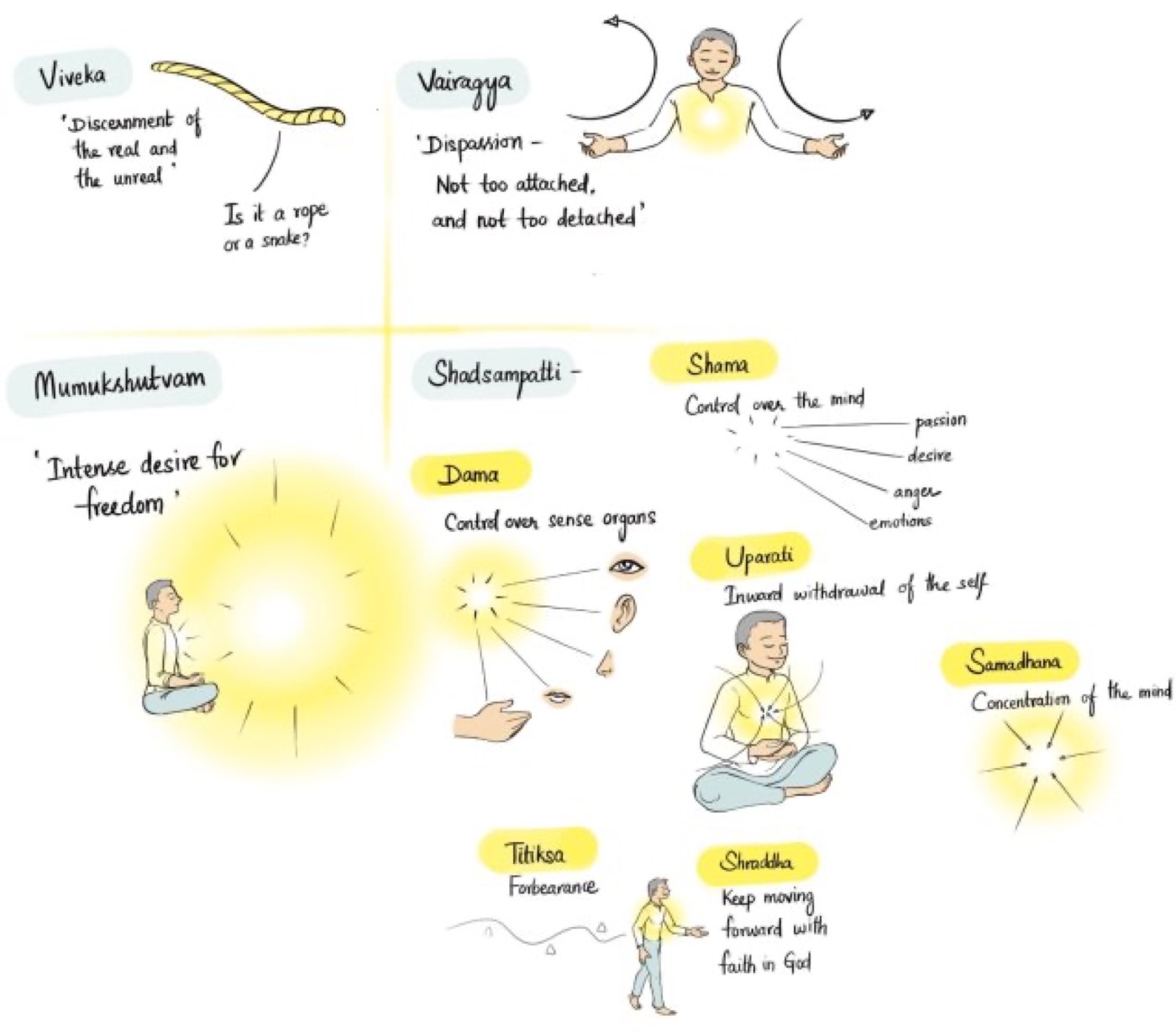
The fourfold qualifications are: Viveka (discernment of the real and the unreal), Vairagya (dispassion), Mumukshutvam (intense desire for freedom), and Shat Sampatti (the ‘six kinds of wealth’). Shat Sampatti consists of Shama[1] or the control over the mind, Dama or the control over the external sense organs[2], Uparati or the inward withdrawal of the self[3], Titiksha or forbearance[4], Samadhana or the concentration of the mind[5], and Shraddha.
This last quality, Shraddha, is essential on the spiritual path and is often translated as ‘faith’. But the word ‘faith’ does not capture the true meaning and significance of Shraddha. Let us examine the idea of Shraddha further.
Going a little deeper
Shraddha has been described as the ‘Faith in the truths of Vedanta as taught by the Guru[6],’ or as ‘Reliance on and self-surrender to the Deity[7].’ Shraddha can be understood as the strong conviction that the teachings of Vedanta are true, the firm belief that the words of the Guru will take one to spiritual realization. This is very different from blind belief, which is how the word ‘faith’ is typically understood.
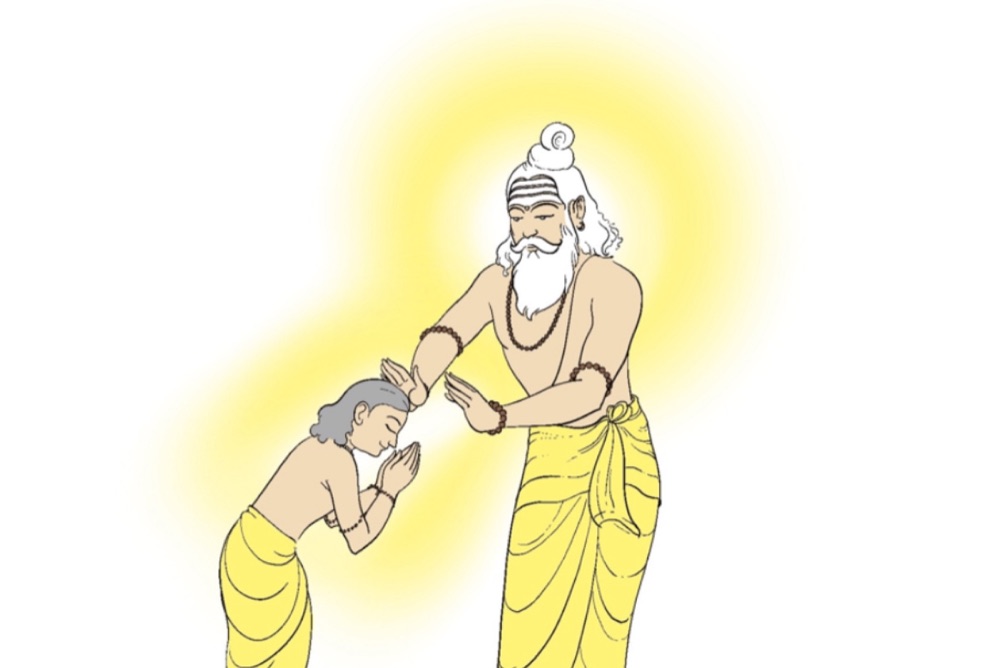
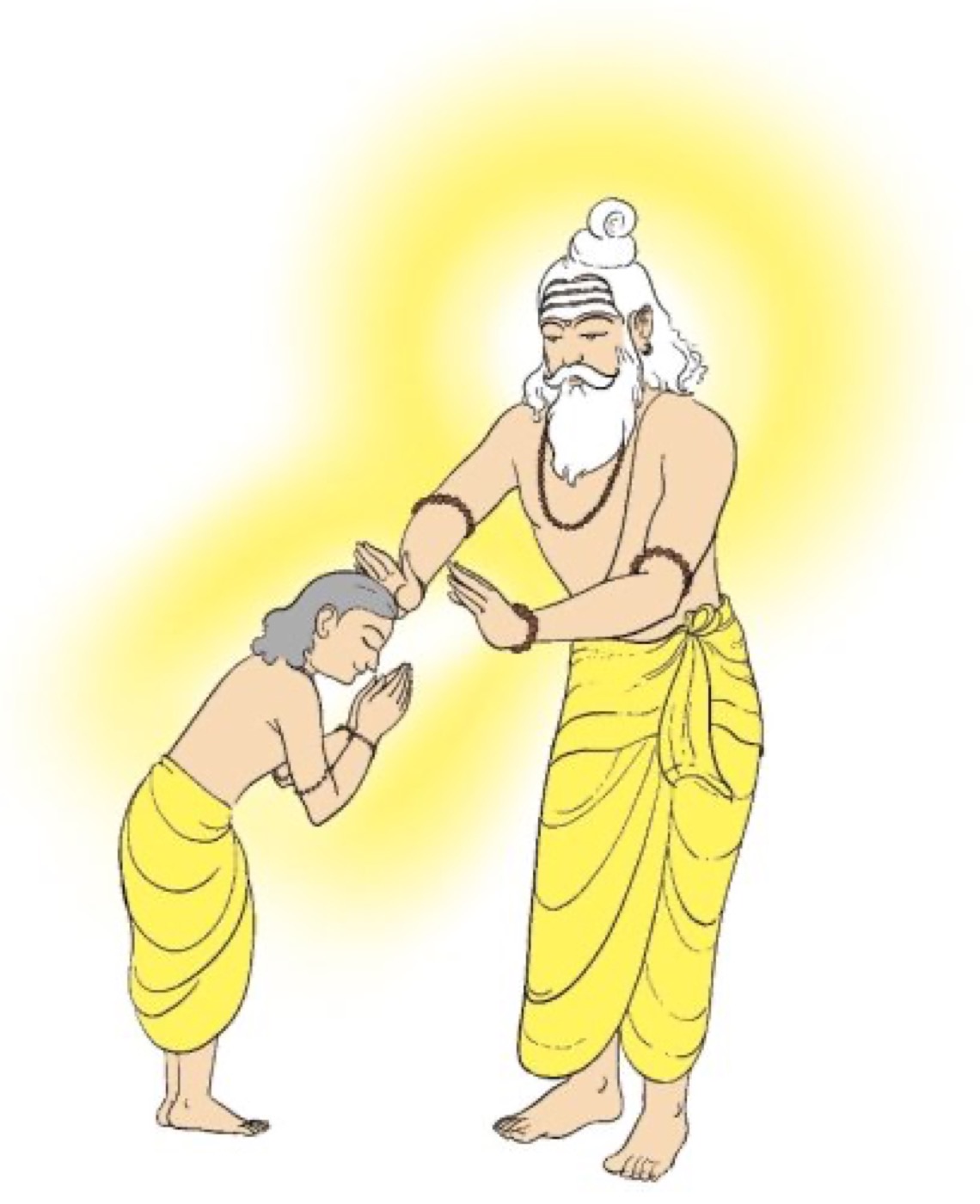
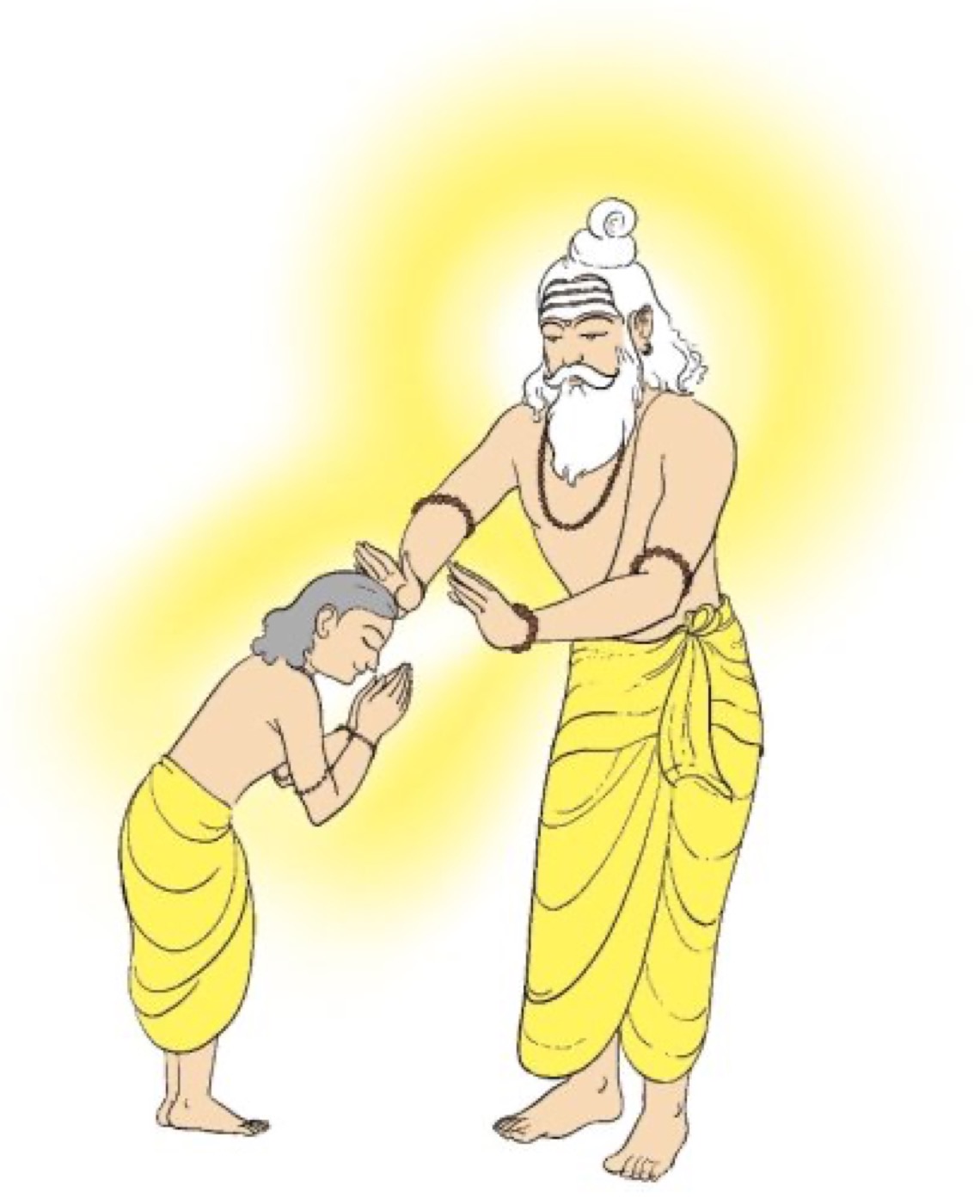
When you begin the Vedantic inquiry - perhaps out of curiosity, perhaps because life’s experiences have led you to it, perhaps on the insistence of an elder - an element of faith is certainly helpful. More precisely, beginners require to have a positive and open-minded attitude towards the instructions that they are receiving. Vedanta does not require you to blindly believe its teachings - ultimately you must reason, inquire, and see the Truth by yourself; but a good student will listen keenly - with full attention - to the instructions and will do their best to soak in the teachings; a good student will not hesitate to ask questions until a concept is clear, but will do so very respectfully - they will question in order to learn, and not in order to prove a point; a good student will respect the teacher’s experience and well-intentioned authority. These are all signs of Shraddha in the student.
Are these not qualities any student must have, regardless of the subject they are studying? When one attends a Mathematics class, do we not go with the assumption that the teachings of Mathematics are true, and that the teacher knows a lot more about the subject matter than we do? We do not enter a Mathematics class with the conviction that Mathematics is a hoax, or that we know more about it than the teacher - if we do, we might not learn much in our classes. We take it on ‘faith’ - we believe - that Mathematics is true, and we trust that the teacher’s instructions will lead us towards a deeper understanding of the subject. This attitude is Shraddha. Vedanta simply asks that you take the same attitude towards spiritual instruction as well.
As your understanding of the Vedantic teachings begins to deepen, as you progress in your studies and sadhana, your attitude as a student will evolve. The initial understanding and clarity you have obtained will give you the confidence that the path you are embarking on is the right one, and the conviction that your Guru is indeed leading you towards the ultimate Truth. At this point the attitude of Shraddha will manifest itself in an increased keenness to listen to, reflect on, and apply the Guru’s teachings in one’s life, and in a firm resolve to adhere to the path regardless of how long or hard it might be.
Shraddha is that conviction from your personal experience which says, ‘When I followed the earlier teachings of my Guru, I immensely benefited from them; now as I am going through the later steps, even though it seems difficult and the logic is not yet clear to me, I must hold on to the instructions, I must keep practicing the spiritual instructions and be patient. Just as I was able to understand and realize the basic teachings, I will surely be able to understand, realize, and benefit from the advanced teachings too.’ Shraddha helps you stay on the path even when the mind is turbulent and the situations are challenging. As you push through and overcome these challenges with Shraddha, you will gain new wisdom which will in turn strengthen your Shraddha to keep moving forward trusting your Guru's guidance!
As Sri Sankaracharya put it, ‘A firm conviction, based upon the intellectual understanding that the teachings of the scriptures and of one’s Master are true - this is called by the sages as Shraddha, which leads to the realization of Reality[8]’. Note that Shraddha is, at this point, not just a conviction based on faith or trust, but based upon the initial intellectual understanding you have gained. This initial understanding has cleared away all your doubts and skepticism. You now open yourself up fully to the instructions of your Guru.
In the path of Advaita Vedanta understanding is essential, but eventually understanding must blossom into realization. The journey from understanding to Self-realization will demand a lot of self-effort, strength, and perseverance. Shraddha is essential in taking us across this journey.
Tying the threads together
Swami Samarpanananda summarizes it as follows - ‘Shraddha is the disposition of a person born of an affirmative faith, conviction, and reverential attitude toward Spiritual Reality. It is born of the words learnt and values imbibed from the scriptures, teachers and parents. When Shraddha is practiced for a long time, it gives rise to humility, sincerity, attentiveness, perseverance, and concentration.[9]
Shraddha is the positive, earnest, respectful attitude with which one must approach education of any kind - spiritual or otherwise. You will find that the best students in any field - the ones most keenly able to grasp the subtleties of the subject matter, the ones making the most progress on imbibing and applying the teachings to their lives - will have this quality of Shraddha. A student studying the Sciences or, say, Business Administration will gain from cultivating Shraddha too.
Reflect on this
Can you think of instances from your life when you approached something with Shraddha? What led you to adopt that attitude? Did it help you in being able to absorb whatever it is that you were learning?