Introducing the concept
Look around you right now. What can you see? If you are outdoors, you can perhaps see people, cars, animals, trees, clouds in the sky - the various things that make up the external world. Gently close your eyes - what do you see now? Your thoughts and memories (perhaps chattering like a monkey), your feelings, your emotions, various mental images - all the things that make up your internal world.
We generally find it easy to say that we are aware of the external world. We say with conviction that these other people, these tables and chairs - they are all appearing to me. We draw a clear distinction between ‘us’ and the external world.

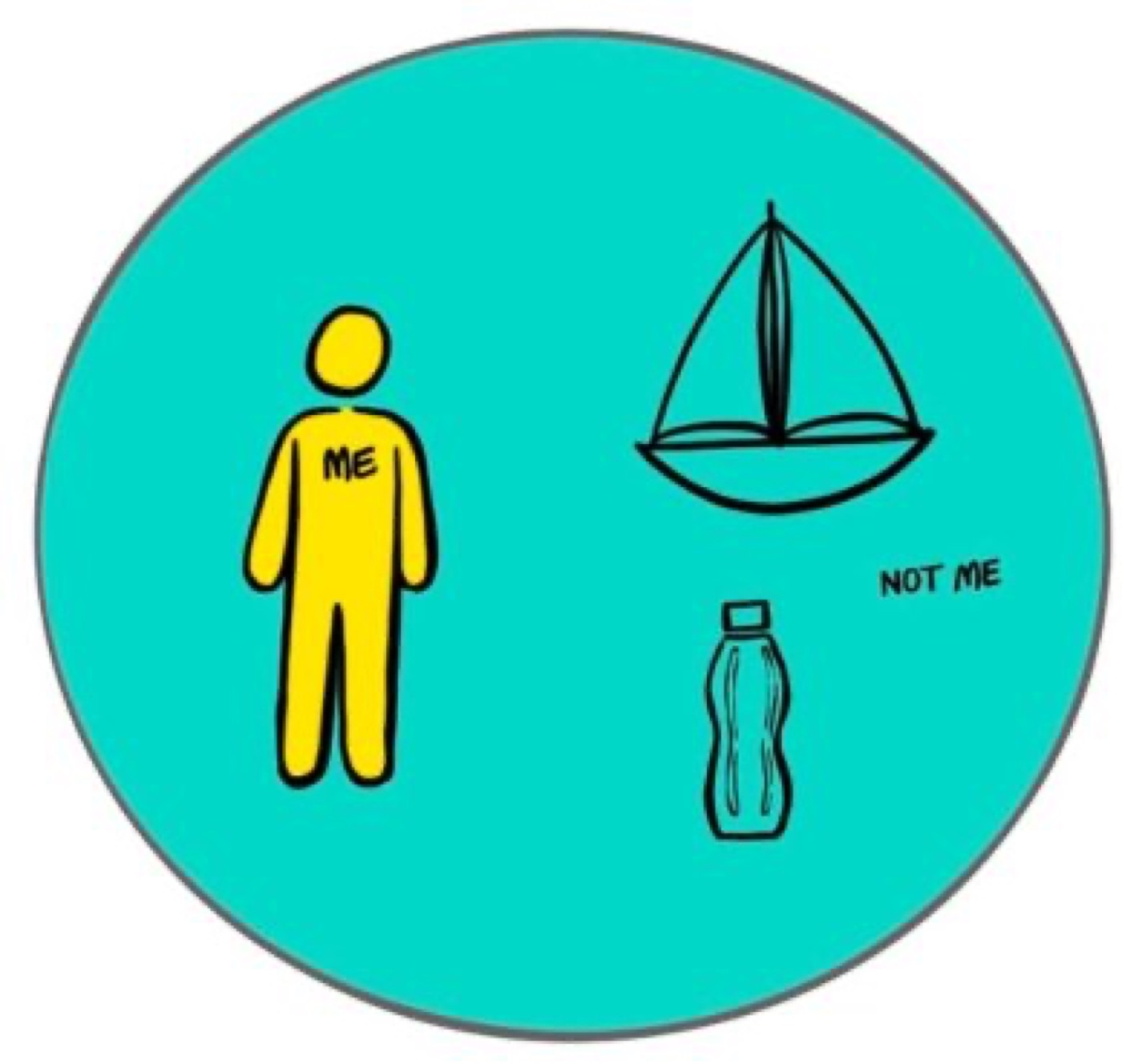
But we often do not draw any distinction between us and the internal world. I can see that this book in front of me is not me, but what about this thought - that is surely me, isn’t it? The thoughts, the emotions - we consider all of these things bundled together to be what constitutes ‘me’.
Vedanta gently nudges us to ask ourselves - who is it, or what is it, that my internal world is appearing to? Who is it that these thoughts and feelings are appearing to? Just like the sky and the stars are appearing to me, are not my memories and emotions also appearing to me?

Reflect on this question, ask yourself - ‘Who or what is aware of the things happening in my mind - right here, right now?’ If the response you get is that obviously ‘I’ am aware of my thoughts, then put the spotlight on this ‘I’. What do you mean when you say ‘I’. You might find that what you mean by ‘I’ is yet another thought or perhaps a collection of thoughts. This sense of ‘I’ is called ahankaara - ego. Ask yourself again, who is the ‘I’ thought appearing to? Who is the witness of the ahankaara? Now that would be the real ‘I’, is it not?
The Vedantic inquiry begins with an examination of who we really are. Probe into yourself, peel away layer after layer, throw away everything that is ‘not I’ - what is it that is left over? As you conduct this inquiry, you will begin to realize that standing behind the external as well as the internal worlds, and shining upon both of these worlds, is the blinding light of Consciousness. And that is what you really are. ‘Chinmaatroham!’[1] writes Shankaracharya - ‘I am Pure Consciousness alone!’
Going a little deeper
Consciousness - chit - is the central concept in Vedanta - and in all of philosophy and spirituality. But the term Consciousness is used loosely and often in very incorrect ways.
Consciousness is that to which everything appears. One must understand Consciousness by what it is not - consider everything that can be seen or heard or touched, everything that can be thought about, everything that can be described in some form, everything that can be pointed to as ‘this’. Consciousness is not any of these. Consciousness is the ‘not this’ for every conceivable ‘this’. Consciousness is the ultimate Witness that quietly observes these names and forms moving about in front of it.
That is why, one of the ways in which Consciousness has been described in Vedanta is Anidam Chaitanyam, which simply means Consciousness (chaitanya) is ‘not this’ (anidam).
Nirvisayatvat cittam asangam[2]. Citta (Consciousness) is nirvisaya (objectless), hence it is asanga (unrelated in any way) from anything objective.
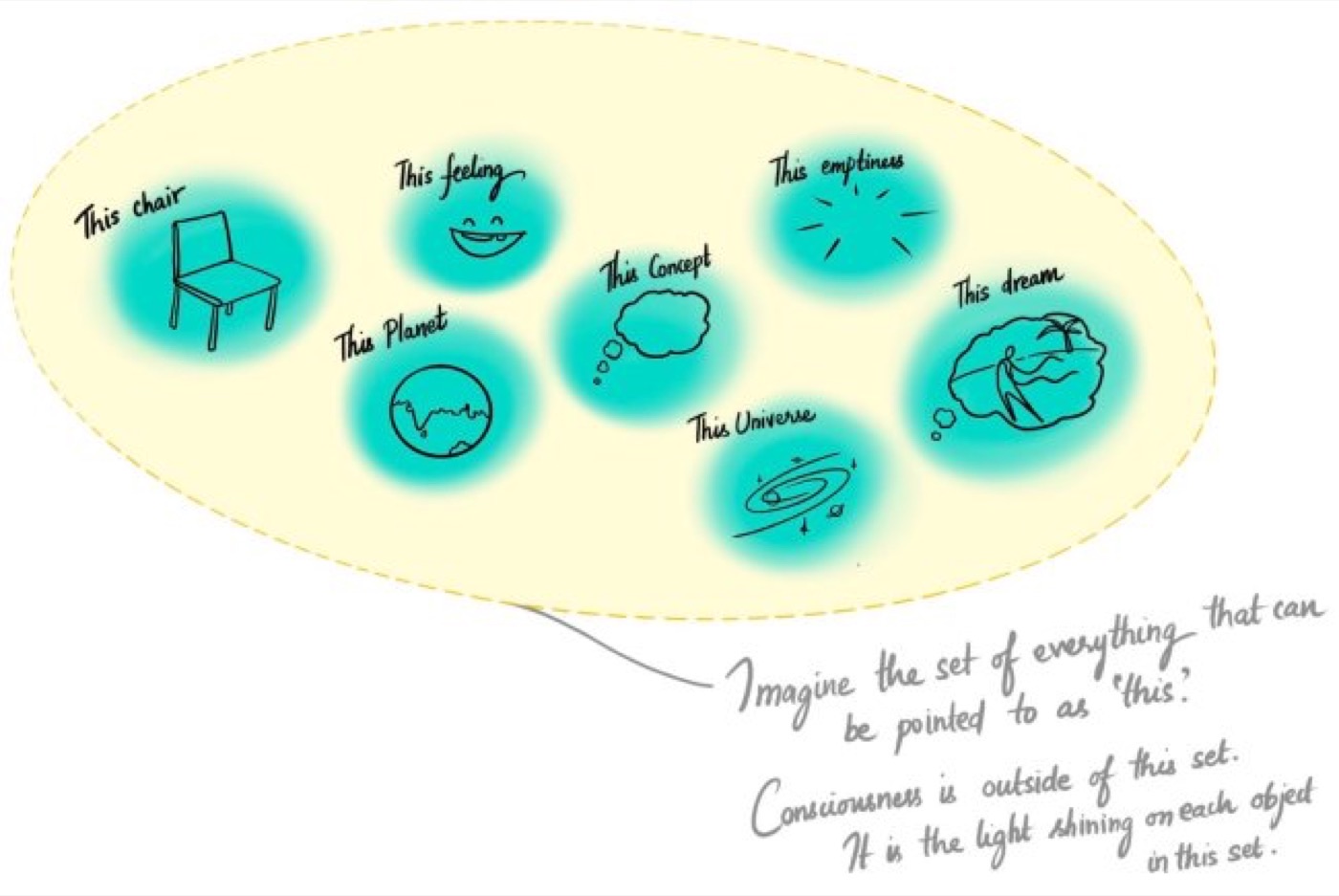
But wait, you might ask - that sounds like Consciousness is… nothing? You might ask - If we cancel out every single object we can possibly conceive of, what is left over?
This is where one must pay attention and try to grasp the core truth, which is direct yet subtle. Take any one object that you see around you right now and focus on it. What you see is the object as it appears to you. Without the gaze of the witness, the object you are seeing now will be forever across an inseparable divide. Does it make sense to talk of the object without you the Witness Consciousness?
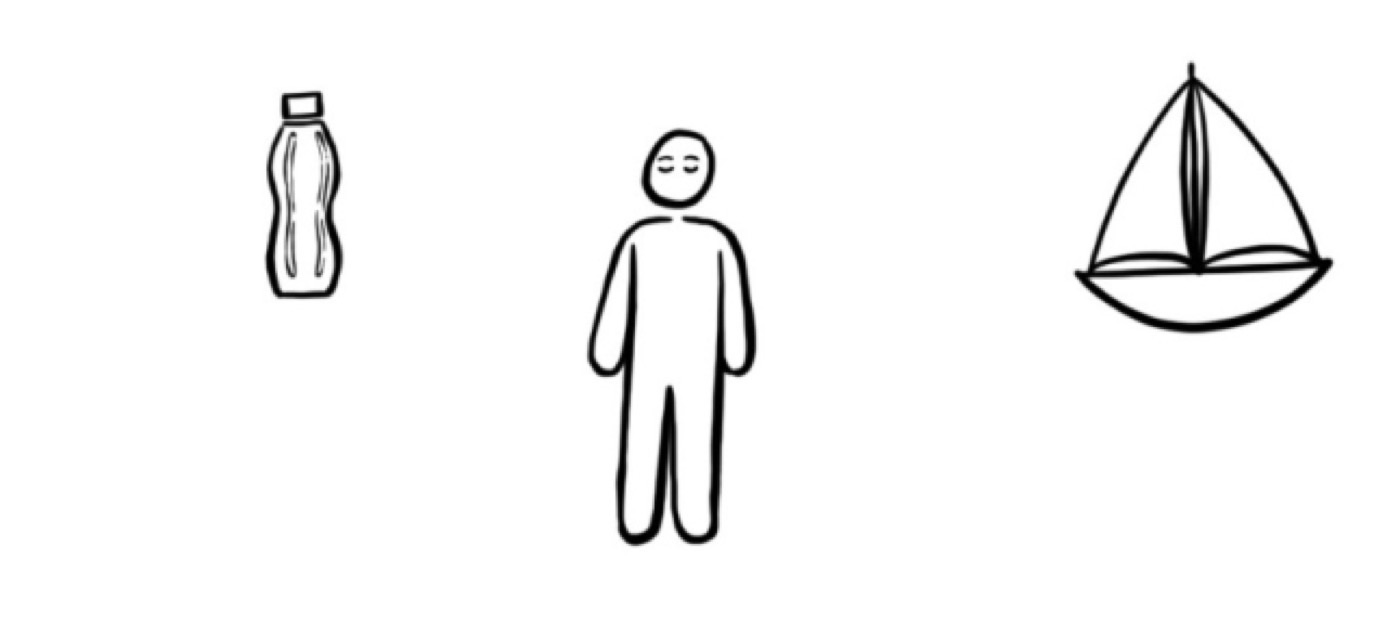
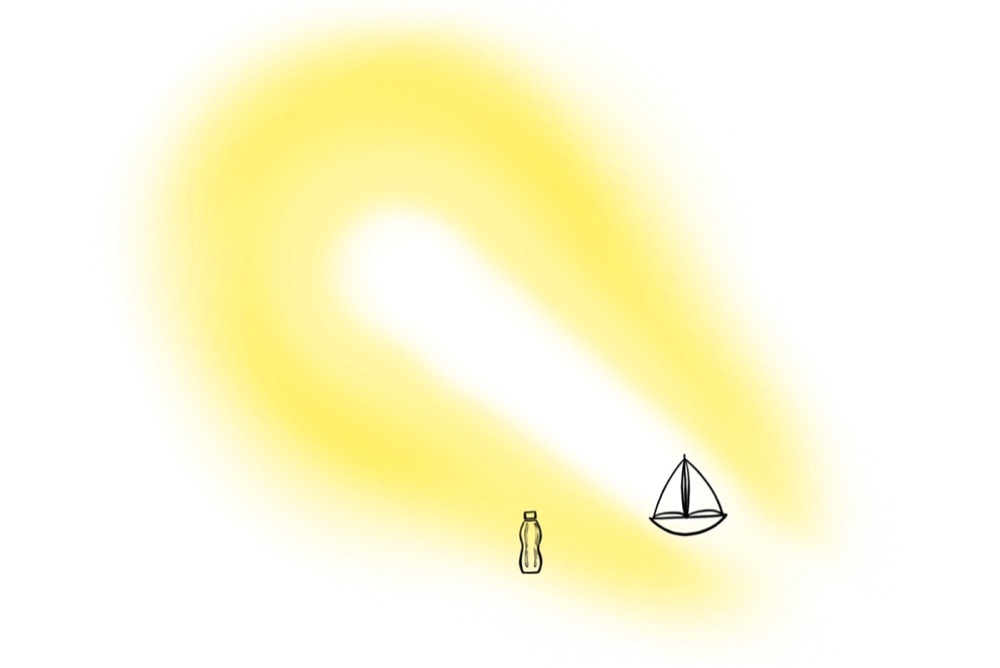
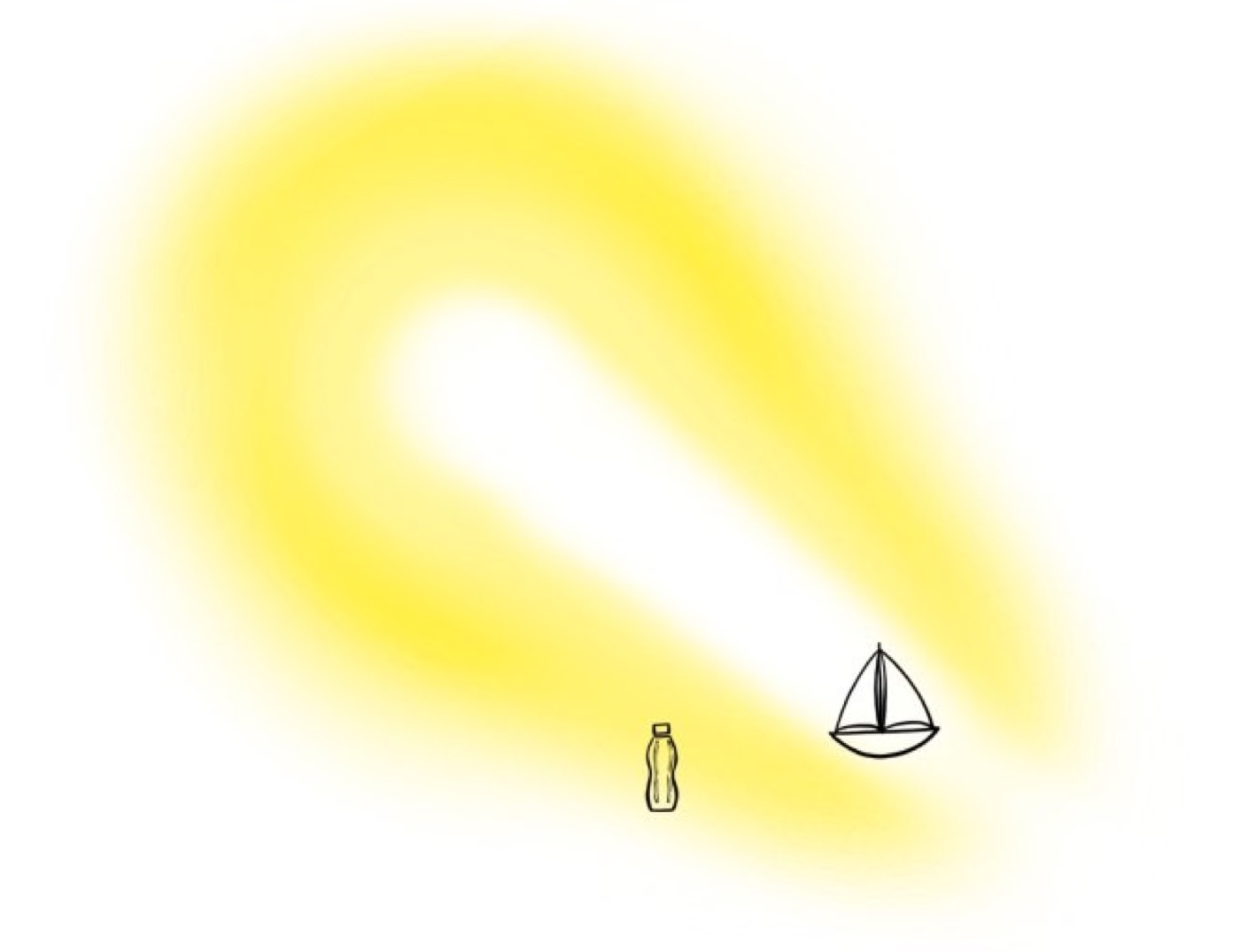
Image 1: We notice there is a bottle, a human and a boat in front of us. The human is unaware of both the things around him at this point. Let us see the human’s first person perspective now.

Image 2: Since the human has closed his eyes, he is not conscious of any object around him.
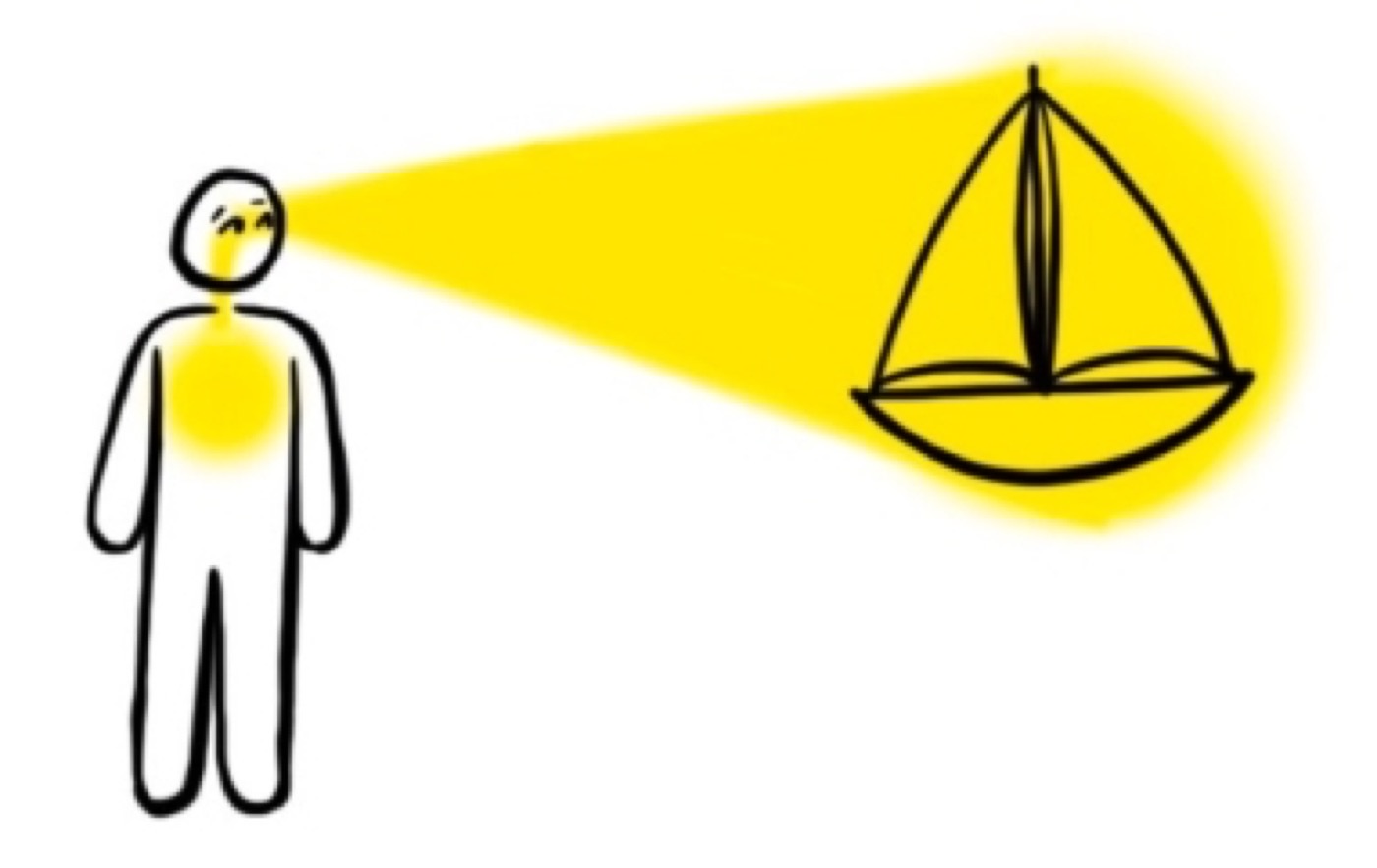
Image 3: The human now opens his eyes and perceives the boat to his left. Internally his light of consciousness shines and he is observing the boat. Notice he has no awareness of the bottle.
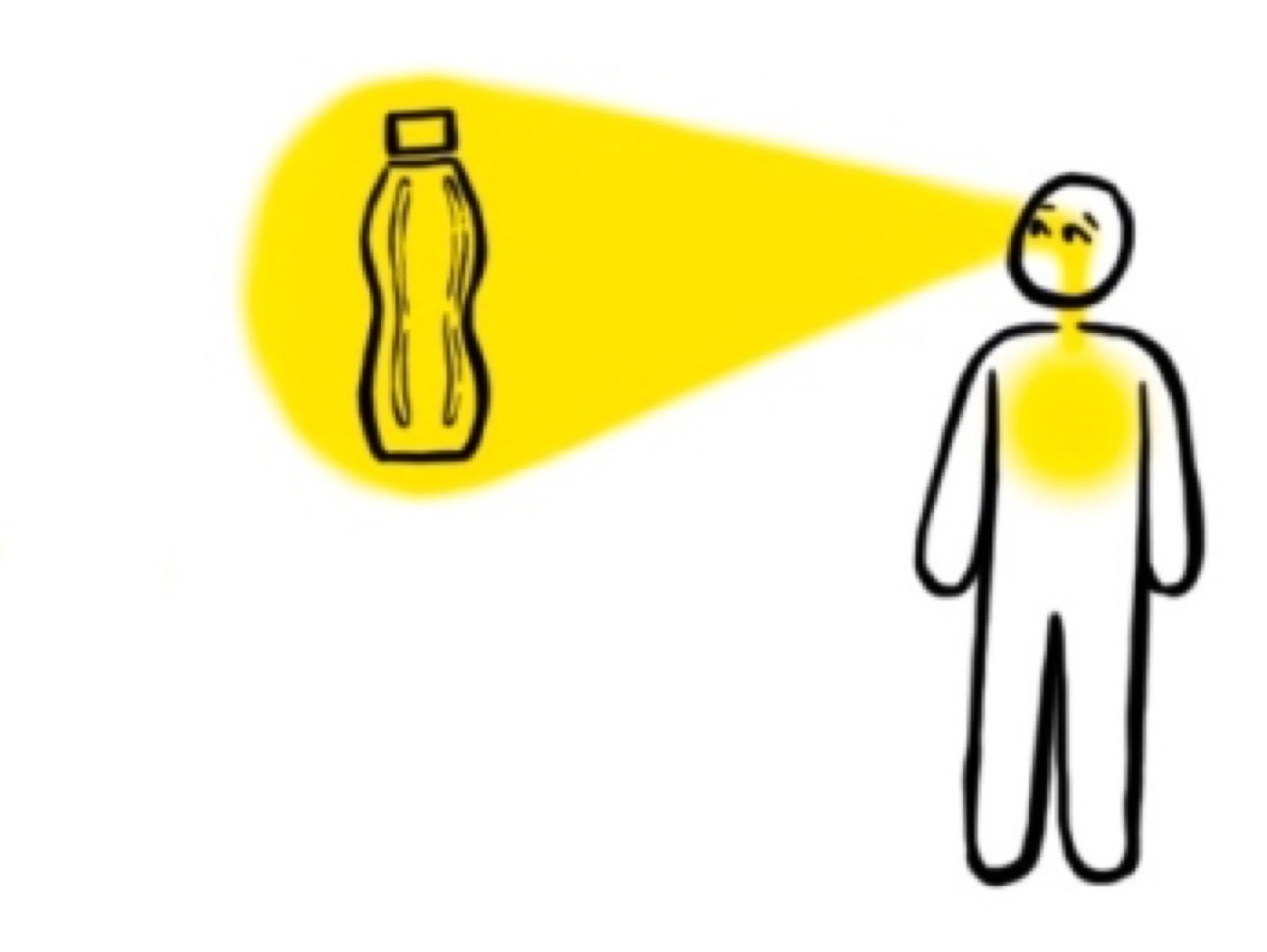
Image 4: Now the human turns to his right and notices a bottle as his consciousness shines on the object. Notice that at this point in time he is unaware of the boat.
Tying the threads together
Consciousness, then is the subjective gaze - it is the first-person experience. It is the Subject to all of the objective world, it is the witness to everything that can be pointed out as an object.
Is this not a negative definition, you might wonder. We are trying to define Consciousness by what it is not. But it cannot be any other way - anything that you tangibly say about Consciousness - any definition you provide, any mental image you create of Consciousness - will be objectifications; Consciousness is the Subject to which all of these definitions or mental images or objectifications appear. The Subject can never be turned into an Object.
So, while you cannot provide an objective definition of Consciousness, the Reality of Consciousness is shining through in every objective experience that we have. Every single moment of our lives, every single experience we have, is an undeniable pointer to our real nature as Consciousness.
While Consciousness might seem like an abstract concept at first, it is anything but - in fact it is the most direct truth that we are flooded with all the time. Swami Vivekananda called it the ‘open secret’.
‘As in the case of pointing out the Arundhati star,’ Shankaracharya writes, ‘the real one happens to be the last after negating all the other ones assumed to be Arundhati, so also in the present context the blissful one, being the inmost of all, is the primary Self.[3]’
It is hard to directly identify the Arundhati star in the night sky. A technique used is to instead, point to other stars close to Arundhati and say ‘this is not Arundhati’. Once we have eliminated every other star, we are left with a clear vision of Arundhati. Similarly, if we can separate out everything that is objective in every experience we have, the realization of what Consciousness is will blaze through.
When you begin to appreciate that your own real nature is pure Consciousness, what do you find when you look out at the world? Is the world anything else other than Consciousness? Is the ‘seen’ (drsya) anything apart from the Seer (drg)? Reflect on this and read our pages on Antahkarana (Inner Instrument), Prajnanam Brahma (Consciousness is Brahman) and Tamah-Prakashavat (Night & Day). In Swami Ranganathananda’s words, the spiritual quest is ‘the struggle of consciousness or intelligence to return to its own original state and discover that the whole world is nothing but an ocean of Pure Consciousness.[4]’
Reflect on this
Examine your experiences, right here and right now. What are you aware of? You might be aware of the outside world - sights, sounds, smells; you might be aware of the internal world - thoughts, feelings, emotions. Pick one thing you are aware of from the external world and ask yourself - ‘To what is this appearing?’ Stay with this question for as long as you can.
After a while, pick one thing you are aware of from the internal world and ask yourself the same question. Stay with this question again for as long as you can.
Does it make any sense to speak about these objects without the awareness to which these objects are appearing? If you turn off the light of consciousness, what happens to these objects?