
Introducing the concept
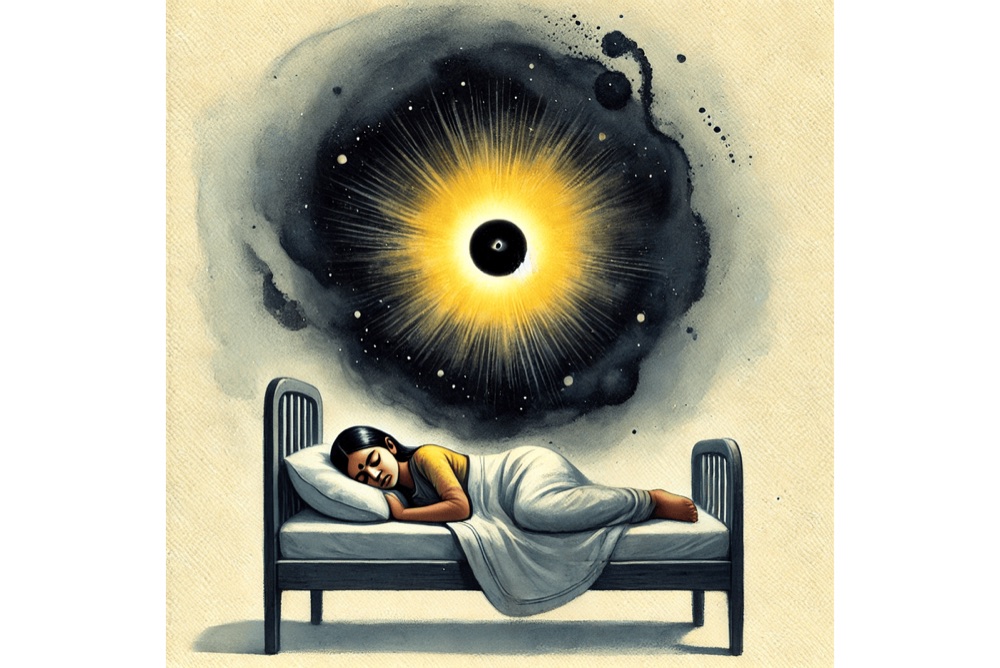
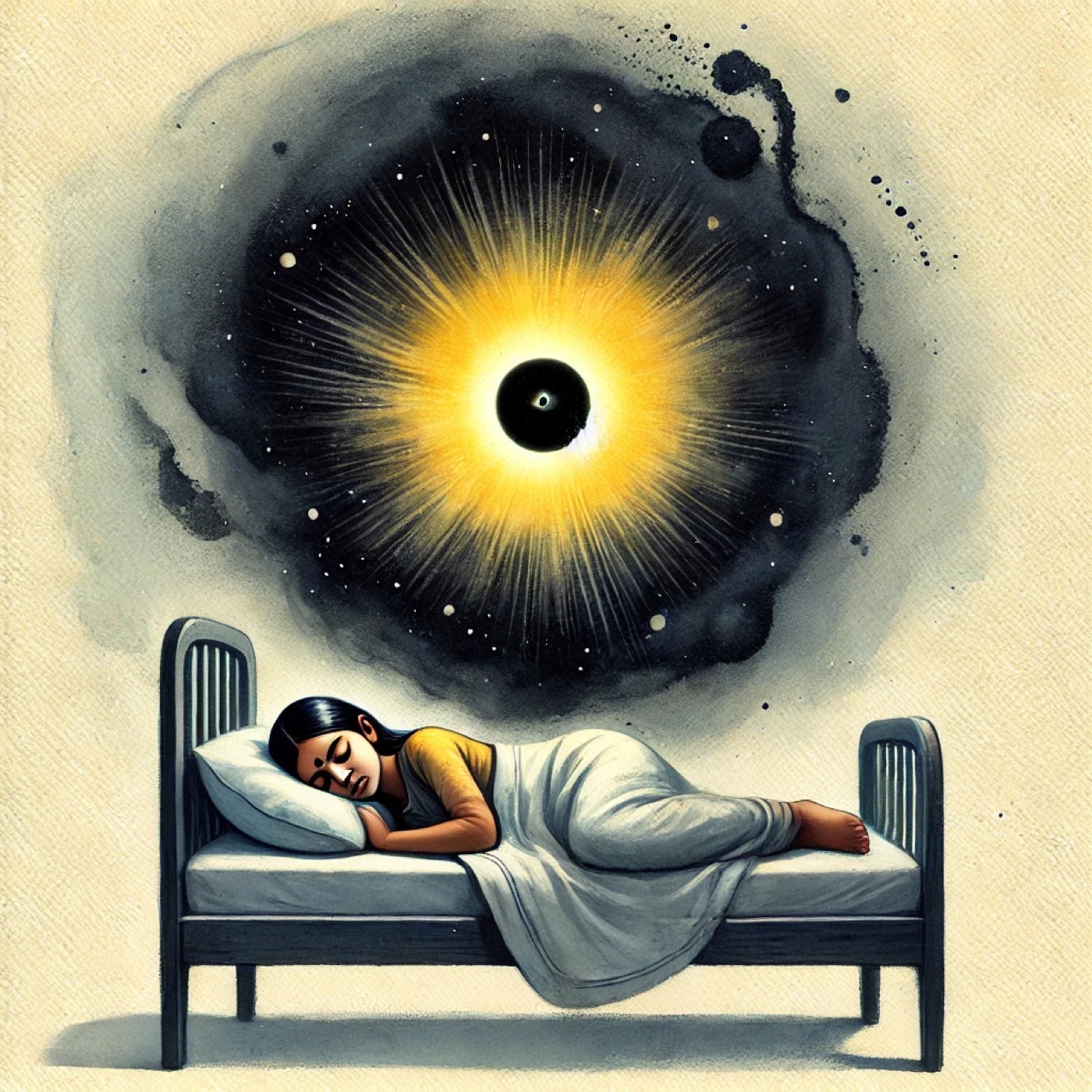
Every night, we close our eyes and drift into a world of sleep. It might be light sleep at first, where some of the sounds from the ‘outside’ world are still present at the edges of your awareness. You might then drift into a world of dreams, which, very much like the waking world, can be a combination of joy and sorrow, excitement and horrors. And then, you might move into a state of deep sleep, where everything shuts down for you - there are no signals from the outside world, no signals from the inside world; a complete blackness.
What happens in deep sleep? Are ‘you’ still present in the state of deep sleep? We often don’t think of it this way, but is deep sleep not similar to death? From the standpoint of your experience, what is the difference between deep sleep and death? Almost no one is afraid of falling asleep; we gladly go into a state of complete blankness every night, confident that we will wake up again to the world; but many of us fear death - why this difference in perception?
The idea of deep sleep, which is called Sushupti in Sanskrit, is an important one in getting to a sound understanding of Advaita Vedanta. Sushuputi is one of the knots that must be untied for an intuitive understanding of the philosophy. It also points to a larger question which we must gain clarity about - the concept of nothingness itself.
What, then, happens to the Self in deep sleep? Let us try and understand.
Going a little deeper
In scientific discourse as well as common parlance today, the word consciousness refers to our inner world of experiences - our thoughts and emotions, and the mental images we see that correspond to the things in the ‘outside’ world. As we have seen in other pages such as the one on Chit (Consciousness), this is an incomplete understanding of what Consciousness is. What we loosely call consciousness corresponds to the Antahkarana of Vedanta.
In Vedanta, the Antahkarana too is part of the objective world; it is an appearance. Is this not very literally true? In which case, the Antahkarana cannot be the witnessing Subject. What the Antahkarana appears to is Consciousness. We suggest that you read this page after you have read and reflected on our pages for Consciousness and Antahkarana, where we explain this important distinction with illustrations.
With this understanding of what Consciousness is, let us look back to our deep sleep state and ask the following question - Was ‘I’ still there in deep sleep?
Let us say, for the purpose of discussion, that you were not present during deep sleep. Which means that your Self is non-existent during deep sleep. How is it, then, that you wake back up and say ‘I slept well’?
If the Self had disappeared when you went into deep sleep, where did it come back from? Did your ‘previous’ Self end when you entered deep sleep, for a ‘new’ Self to come into being when you woke up? If that is the case, how is there a continuity of experience and memory that you have? How are you able to say that ‘l’ had a busy day yesterday, that ‘I’ went to sleep tired, that ‘I’ have woken up fresh? [Common thread]
There is a Self, the ‘I’, that is constant across these changes. Which means that your Self was present while you were in deep sleep as well. What is the nature of this ‘I’? If you have gone through our page on the Atman, you will know that your real nature - the Self - is the Atman which is pure Consciousness.
Which means that Consciousness remains undimmed even when you are in deep sleep, even when the World has completely shut down for you. This is where the common understanding of the word consciousness breaks down - in this everyday usage of the term, if there is nothing to experience, there is no consciousness, since consciousness is just taken to be the be the experiences that we have.
But Vedanta asks the question - to what do these experiences appear? If there are experiences, there must certainly be an experiencer - this experiencer is Consciousness. This experiencer will continue to remain as experiences play out in front of It. And this experiencer will remain unchanged even when there are no experiences at all - like in deep sleep.
Deep sleep is Consciousness looking at a blankness. As Swami Sarvapriyananda puts it, deep sleep is not an absence of experience but an experience of absence.
You are not aware of anything during deep sleep because the Antahkarana or the mind has shut down. With the mind the Ahankara or the ego has shut down, thus there is no awareness of an ‘I’ that is having an experience; but the real ‘I’ is shining forth undimmed. It is important to understand that the mind and Consciousness are different - examining what is happening in deep sleep is a good way to clarify this understanding.
Tying the threads together
We will leave you with an important concept that emerges from what we have just said, which is around the concept of ‘nothingness’ or ‘emptiness’.
We see that Consciousness is present even when nothing is presented to it; in other words, Consciousness remains even when there is a blankness or an absence of any experience.
Let us dwell on what this is pointing at. Is not emptiness or blankness too a concept that requires a witness? Does it make sense to speak of a blankness without the Consciousness to which the blankness is appearing? As Vidyaranya Swami puts it, even nullity requires a witness.
The Upaniahads describe Brahman or Consciousness as ‘Neti, neti’ or ‘Not this, not this’. The first ‘Neti’ represents the manifest Universe - the entire physical as well as mental world; in other words, everything that appears to you. Everything in the objective world undergoes change and is transitory; thus nothing in the world is ultimately real. To understand this better, read the page on Sat (Existence). So to get to Brahman one must drop the entire manifest world.
But then, what is left over? Well, nothing. Or, to be precise, no ‘thing’.
Does that mean Brahman is ‘nothing’, that Brahman is a void or emptiness? Not at all. When we drop the manifest Universe, we are getting rid of the entire objective world. But Brahman is not an object, it is the Subject. It is the Witness of the presence of the World, and it is the Witness of the absence of the World as well. Brahman, thus, is not the nothingness. To really get to Brahman, we must drop the blankness too. This is the second ‘Neti’. Drop the blankness too and what is left over? Brahman alone.
This is a very subtle concept and we will go into it in some more detail in our page on Shunyata and Poornam (Emptiness and Fullness).
Your deep sleep state is comparable to the state of cosmic blankness after the first ‘Neti’. You - as Consciousness - are still present and shining forth on the blankness. As Acharya Sureshwara writes in the Naiskarmya Siddhi, the Atman is the witness of the modifications of the intellect (i.e. our thoughts, our feelings, our perceptions of the World), and the Atman is the witness of the absence of modifications of the intellect (i.e. deep sleep).
Technically, deep sleep is the state in which Avidya is present in its seed or unmanifest state. We say in our page on ‘Maya’ that Maya-Avidya has both concealing and projecting aspects. In deep sleep, only the concealing aspect of Maya-Avidya is present - Consciousness covered by Avidya.
When you wake up every morning, examine where ‘you’ were and what you were ‘experiencing’ while you were in deep sleep the previous night. This will provide a sharp pointer to your real nature.
‘When a person is so asleep that he sees no dream whatsoever,’ it says in the Kausitaki Upanishad, ‘he becomes one with that breathing Atman alone. When we wakes, even as sparks proceed in all directions from a blazing fire, even so from this Atman… come out the world of objects.’[1]
Reflect on this
Consciousness is the witness of the modifications of the intellect, and Consciousness is the witness of the absence of the modifications of the intellect.
Consciousness is required to know the presence as well as the absence of anything.
When you say there is ‘nothing’ in deep sleep, to whom or to what does the ‘nothing’ appear?
Isn’t nothingness itself a concept that appears to the Subject which is Consciousness?
As Vidyaranya Swami writes in the Panchadasi, even nullity requires a witness.
Play this around in your mind, examine it from different angles, try to break it down. When you ‘get’ it, you will find that your understanding of the central concept of Consciousness has solidified.